
Unlock the Stars: Choosing the Best Professional Telescope for Astrophotography
The cosmos has always captivated humanity, but only a select few tools can truly unveil the astronomical wonders of the universe. Enter the world of professional telescopes for astrophotography—where precision meets the profound expanses of space. If capturing celestial bodies in vivid detail sounds enthralling, then selecting an appropriate telescope becomes paramount in your astronomical journey.
Exploring the night sky through astrophotography isn’t just about owning a telescope—it’s about finding the right symbiosis of lens, mirror, and digital technology to magnify and record the universe in all its splendor. The market boasts a variety of high-end telescopes from established brands like Celestron, Orion, and Sky-Watcher, each offering unique features that cater to both amateur astronomers and seasoned stargazers.
Celestron NexStar 8SE Telescope
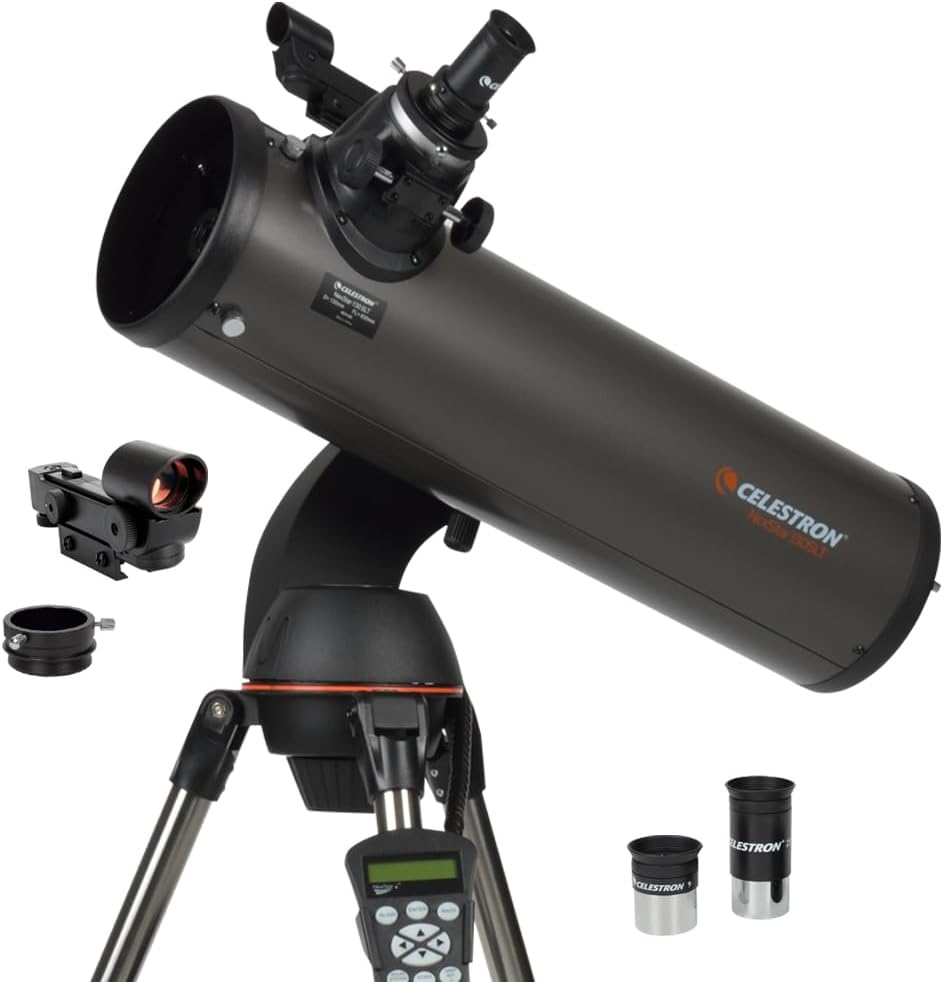
The Celestron NexStar 8SE Telescope stands as a beacon for those who combine a love for both traditional stargazing and astrophotography. Its iconic orange tube and cutting-edge features make it a favored choice for enthusiasts looking to delve deeper into the cosmos.
Pros
- Automated GoTo mount simplifies locating celestial objects
- Large 8-inch aperture provides excellent light-gathering capabilities
- Portable and easy to assemble design
- Compatible with high-quality eyepieces and cameras
- Robust database with over 40,000 celestial objects
Cons
- Higher price point
- Battery life can be limiting for extended observation sessions
Key Features & Benefits
The NexStar 8SE excels in user-friendly automation with its sophisticated GoTo mount, allowing even beginners to locate objects in the night sky effortlessly. The substantial 8-inch aperture not only enhances the fine details in planetary and deep-sky objects but also significantly improves image brightness, making it stellar for long-exposure astrophotography sessions. Integration with tech accessories is seamless, broadening its appeal to tech-savvy astronomers.
Durability is key with the NexStar 8SE; its sturdy build is designed to withstand frequent use, making it an excellent long-term investment for serious astronomers. The telescope’s portable design does not compromise on stability, ensuring crisp, clear images, enhanced by the StarBright XLT optical coating that improves light transmission.
Sky-Watcher EvoStar 120 APO Doublet Refractor
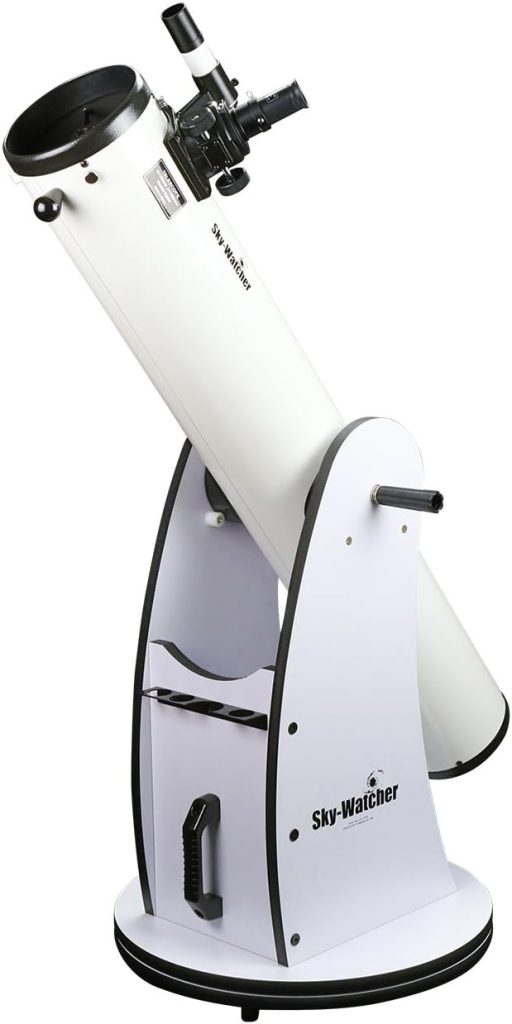
For those who prioritize crystal-clear clarity in their celestial photographs, the Sky-Watcher EvoStar 120 might just be the telescope you’re looking to add to your collection.
Pros
- Exceptional chromatic aberration reduction
- Precision optics with outstanding sharpness and color correction
- Relatively light and portable for its class
- Robust build quality
- Comes with a dedicated field flattener
Cons
- Requires a sturdy mount due to its length and weight
- Some find the focuser could be smoother
Key Features & Benefits
The EvoStar 120 is renowned for its superior optical performance, thanks to its apochromatic (APO) lenses which minimize chromatic aberration. This feature is particularly important in astrophotography where color fidelity and edge sharpness in images are crucial. The inclusion of a dedicated field flattener is a significant boon, enhancing the flat-field imaging that is vital for stellar photography.
Its robust build underscores a commitment to longevity, ensuring that this telescope can be a constant companion on your astrophotography adventures. The EvoStar 120 remains user-friendly for enthusiastic beginners, yet possesses the professional-grade optics needed by more experienced users. Although demanding a sturdy mount might seem like a drawback, it translates into steadier, truer images—a definite plus in the long term.
How to Choose the Right Unlock the Stars: Choosing the Best Professional Telescope for Astrophotography
Selecting the right telescope for astrophotography isn’t just about the biggest aperture or the most features; it’s about matching the telescope’s capabilities with your specific needs and aspirations. Consider factors such as compatibility with other devices, ease of use, and portability if you often travel to dark-sky locations.
FAQ
- What should I look for in an astrophotography telescope?Aim for a telescope with good aperture size, excellent optics, and sturdy build. Equally important are the mount’s stability and the compatibility with your camera.
- Can beginners engage in astrophotography?Yes, many modern telescopes are equipped with features that facilitate beginners to start with astrophotography. Automation features like a GoTo mount can be incredibly helpful.
- What’s the importance of the mount in astrophotography?A solid mount is as crucial as the telescope itself, as it holds the scope steady during long exposures needed to capture clear, detailed astronomical images.
- How critical is portability in a telescope for astrophotography?Portability is vital if you are planning to transport your telescope to locations with dark skies, which are ideal for astrophotography.
- Are refractors or reflectors better for astrophotography?Both have their merits, but refractors are generally preferred for their ability to provide clearer and crisper images with less optical distortion.
- What additional equipment should I consider buying?Consider investing in a good quality camera, a sturdy mount, adapters for your camera, and possibly filters that enhance specific types of celestial photography.
Conclusion
Selecting a telescope for astrophotography is an exciting step towards capturing the majesty of the cosmos. Each telescope offers unique features, but the right one depends on your individual needs, such as portability, ease of use, and compatibility with other gadgets. Evaluate your priorities, and you will find a telescope that not only captures stars but also delights your stargazing spirit for years to come.