

Explore the Night Sky: Best Large Aperture Telescopes for Stellar Viewing
Peering into the cosmos through a telescope is akin to exploring an expansive ocean from the edge of a cliff. The deeper and clearer one can look, the more awe-inspiring the view. Large aperture telescopes are the grand observatories of the backyard astronomer, turning faint whispers of light from distant galaxies into detailed spectacles accessible from your own home. In this guide, we delve into the best large aperture telescopes for stellar viewing that promise not only to magnify the stars but also to bring the wonders of space closer to Earth.
With advancements in optical technology, the range and capabilities of these telescopes have grown immensely, making what was once only possible for professional astronomers accessible to amateurs and serious stargazers alike. From the backyard to remote dark sky sites, these tools offer unparalleled opportunities to explore the night sky. As we explore each model, we’ll look into how they can transform your celestial observations.
Celestron NexStar 8SE Telescope
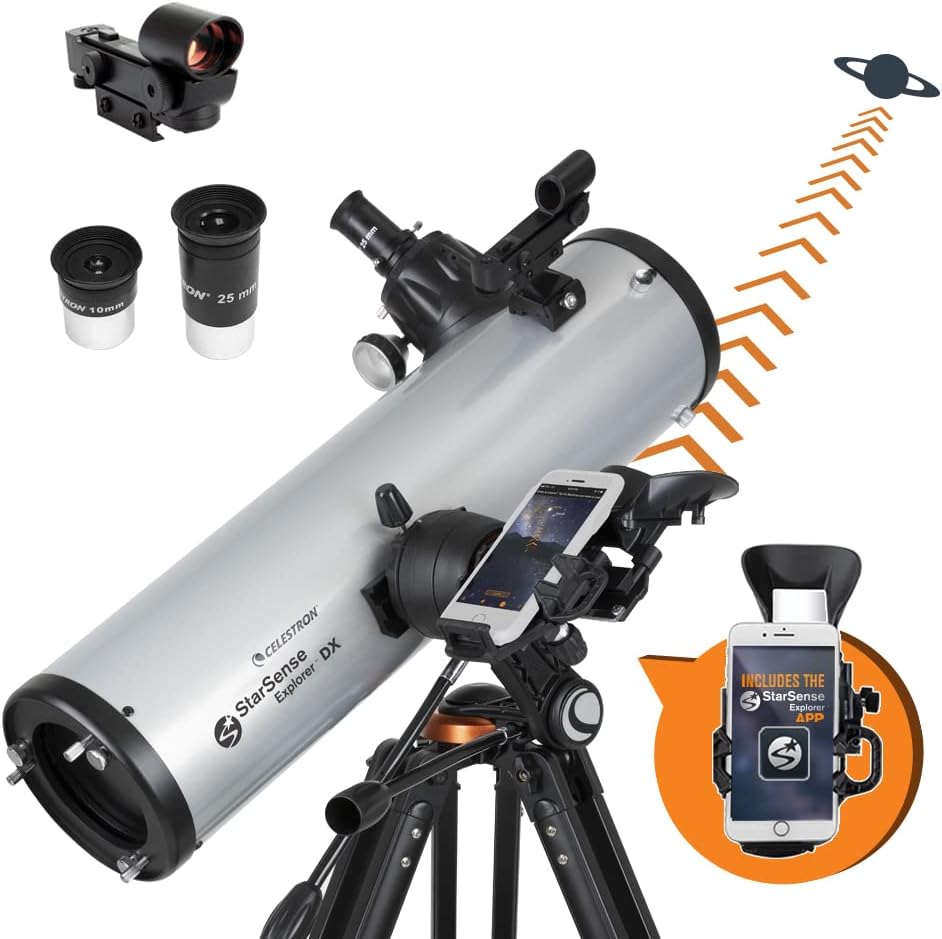
Embrace the universe with the Celestron NexStar 8SE, a telescope that combines user-friendly features with a powerful 8-inch aperture. This telescope is perfect for those who want to dive deep into the details of space without getting overwhelmed by complex setup processes.
Pros
- Excellent light-gathering ability with an 8-inch aperture
- Fully automated GoTo mount with a database of over 40,000 celestial objects
- Easy to assemble and use, even for beginners
- Portable design makes it suitable for various observation locations
- Compatible with high-quality accessories and eyepieces
Cons
- Relatively high price point
- Requires power supply for optimal use
Key Features & Benefits
The Celestron NexStar 8SE is renowned not only for its sizable aperture but also for its advanced technology. The telescope’s unique single-fork arm design and sturdy steel tripod are ingeniously crafted to offer a balance of stability and portability. Capable of delivering crisp, detailed images of both planetary and deep-sky objects, its optical abilities are enhanced by high-quality glass and StarBright XLT high transmission coatings.
Furthermore, the included GoTo mount and handheld controller provide an automated stargazing experience that can locate and track celestial objects with precision. This feature is particularly beneficial for beginner astronomers who appreciate spending more time observing than adjusting their equipment.
Orion SkyQuest XT10 Classic Dobsonian Telescope
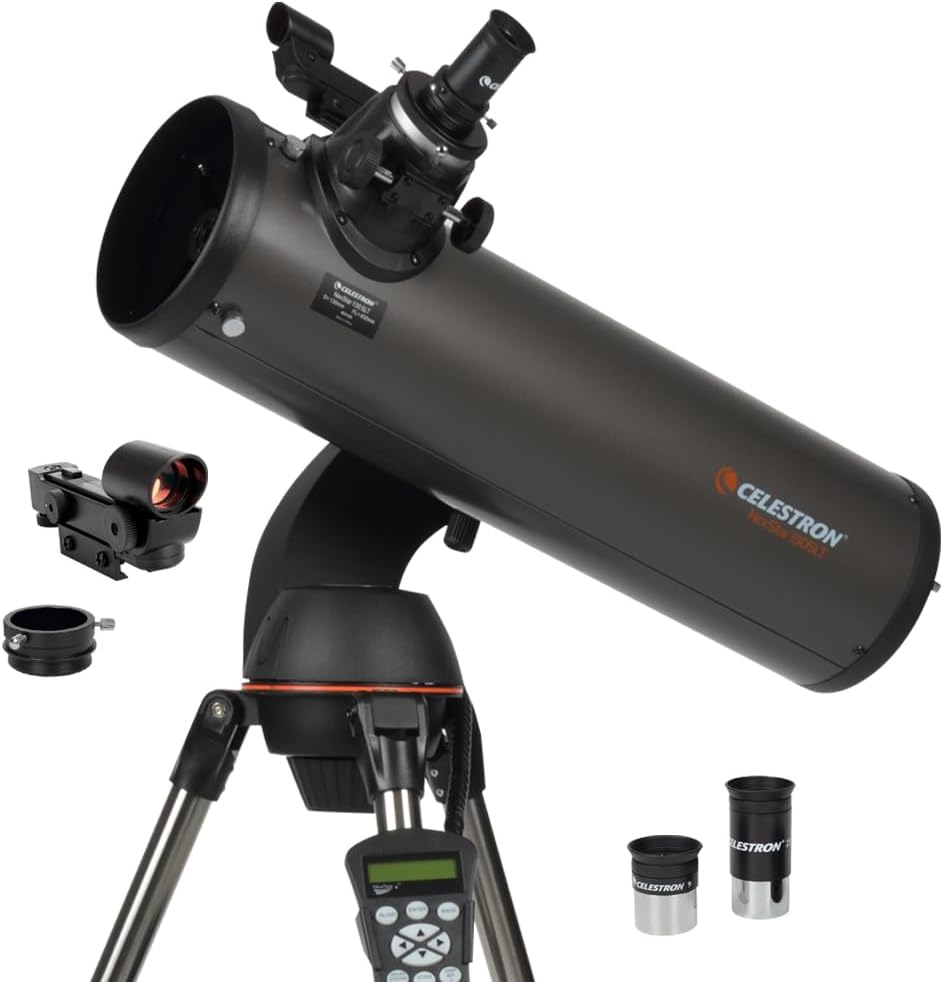
The Orion SkyQuest XT10 Classic allows you to take a journey through the cosmos with its substantial 10-inch aperture providing spectacular views of the Milky Way’s most cherished celestial bodies. Designed particularly for deep-sky observation, this Dobsonian reflector telescope is as powerful as it is practical.
Pros
- Massive 10-inch aperture captures breathtaking deep-sky views
- Simple, robust and very easy to operate
- Excellent value for the money
- Smooth adjustment controls
- Ideal for both beginners and seasoned astronomers
Cons
- Bulky, less portable than some other models
- No automated tracking capabilities
Key Features & Benefits
The real beauty of the Orion SkyQuest XT10 lies in its uncomplicated, straightforward design that focuses on sheer performance. The large 10-inch mirror excels in light collection, bringing faint galaxies, nebulae, and star clusters into clear view. This model’s classic Dobsonian mount supports smooth azimuthal movement, which allows for easy manual tracking of celestial objects across the sky.
Despite its size, setting up the XT10 is surprisingly straightforward. The lack of complicated electronics means that once the telescope is assembled, you can begin observing immediately with minimal fuss. This makes it an enticing choice for those who value simplicity and efficiency in their astronomical pursuits.
How to Choose the Right Explore the Night Sky: Best Large Aperture Telescopes for Stellar Viewing
Choosing the right telescope to explore the night sky involves several considerations. Key factors include the aperture size, which greatly affects the telescope’s ability to gather light. Larger apertures can see fainter objects and provide more detail. However, the size of the telescope also impacts its portability.
Beyond the aperture, potential buyers should evaluate the telescope’s ease of use. Automated tracking features can enhance the viewing experience, especially for beginners. Build quality is also crucial as it dictates both the durability and the quality of the images produced. Finally, consider the compatibility with additional accessories, such as cameras, which could expand your astrophotography capabilities.
FAQ
What does aperture mean in a telescope?
Aperture refers to the diameter of the telescope’s primary optical component, which can be a lens or a mirror. It determines how much light the telescope can gather, which influences both the brightness and sharpness of the images viewed.
How important is portability in a telescope?
Portability is essential if you plan to travel to less light-polluted areas for stargazing. Telescopes with collapsible designs or those with removable components are preferable for easy transport.
Can I use these telescopes for astrophotography?
Yes, many high-end telescopes are suitable for astrophotography, especially if they have compatibility with digital cameras and provide stable tracking capabilities needed for long exposure images.
What should I consider regarding maintenance?
Maintaining a telescope involves regular cleaning of the lens or mirrors and ensuring that the mechanical parts remain in good working order. Opt for models that offer straightforward maintenance routines.
Do larger apertures provide better performance in urban areas?
In urban areas with high light pollution, larger apertures can gather more light, which may help in viewing fainter celestial objects.
Is it worth investing in a telescope with GPS technology?
GPS technology can significantly enhance the ease of use by automatically calibrating the telescope’s position and time, which helps in accurately locating celestial objects.
Conclusion
Selecting the right large aperture telescope can profoundly change your relationship with the night sky. Each model reviewed here offers a unique set of features that cater to different preferences and needs, whether you’re just starting or are a seasoned star watcher. Always consider the balance between performance and convenience, and remember, the best telescope is one that you will regularly use and enjoy.