
Top Picks: Best Refractor Telescopes for Astrophotography
Imagine capturing the crisp, starlit beauty of the Orion Nebula or the vivid rings of Saturn from your backyard. Astrophotography connects you not only to the stars but also to a community passionate about the beauties of the universe captured through the lens of a telescope. The right refractor telescope can transform your stargazing experience, allowing you to dive deep into the cosmos with clarity that’s breathtaking. For enthusiasts looking to delve into astrophotography, choosing a suitable refractor telescope is crucial for capturing celestial magic.
Refractor telescopes are preferred for astrophotography due to their ability to provide high-resolution images with minimal chromatic aberration. They are designed to handle the challenges of photographing celestial objects which require high precision and detailed focus. This roundup explores the best refractor telescopes tailored for astrophotography, ensuring you find a model that not only fits your astronomical ambitions but also enhances your celestial photography journey.
Celestron AstroMaster 102AZ
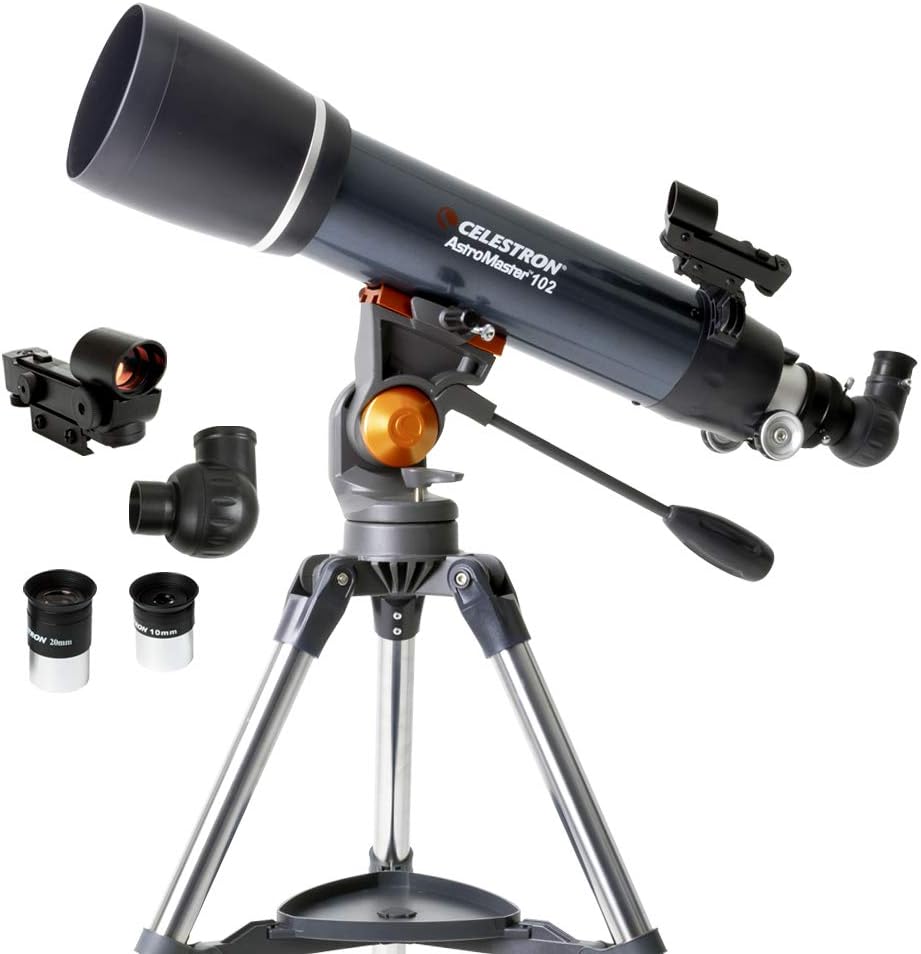
Ideal for Beginners: The Celestron AstroMaster 102AZ stands out for those just starting their journey in astrophotography. It’s user-friendly and provides clear, crisp images of celestial bodies.
Pros
- Simplified assembly – no tools required
- Lightweight and portable design
- Includes two eyepieces and a smartphone adapter
- Sturdy steel tripod enhances image stability
Cons
- Manual tracking can be challenging for beginners
- Not suited for deep-sky photography without additional accessories
Key Features & Benefits
The Celestron AstroMaster 102AZ refractor telescope is equipped with a 102mm objective lens that captures a wealth of light, making your images brighter and clearer. Coming with a smartphone adapter, this telescope lets you easily capture and share images and videos of your stellar observations. The focal length of 660mm (f/6.5) is ideal for wide-field astronomical observation, ensuring that users can enjoy detailed views of the moon’s surface and planets.
Moreover, the included Altazimuth mount makes it straightforward to track celestial objects as they move across the night sky. Although manual, this system is intuitive enough for novices to grasp with some practice. The sturdy build of the supplied steel tripod significantly aids in maintaining steady views, which is essential during high-power magnification viewing.
Orion StarBlast 102mm Altazimuth Travel Refractor Telescope
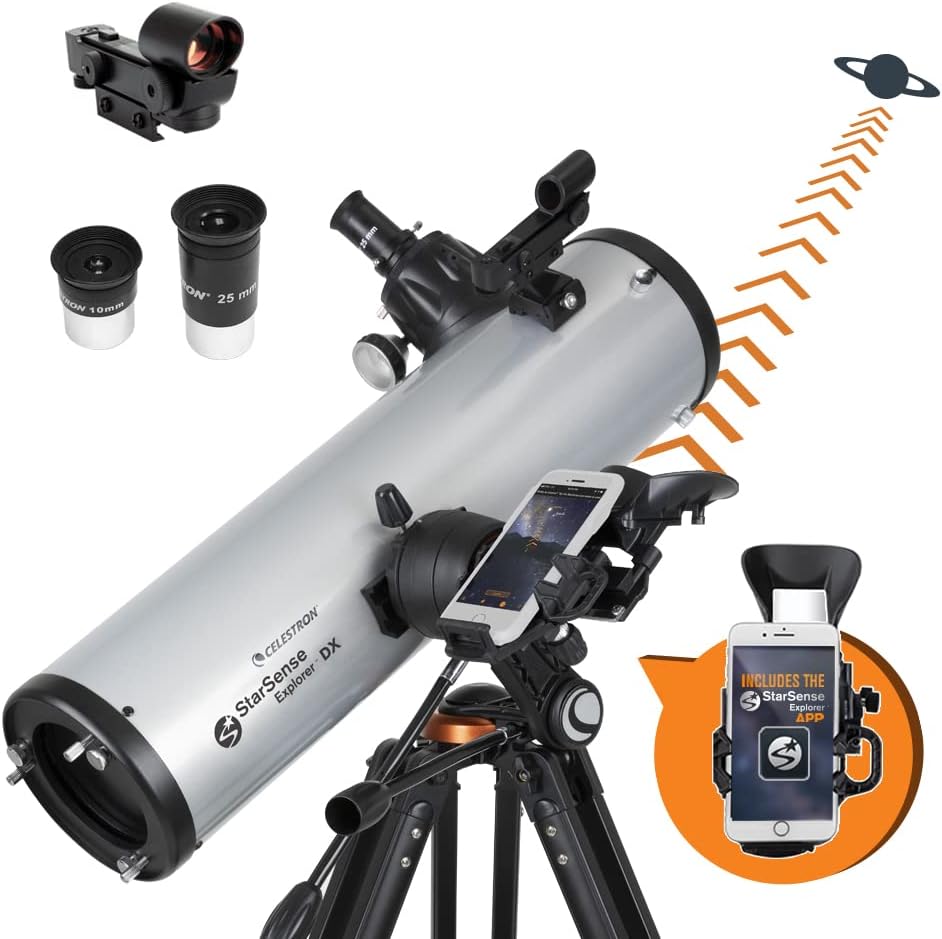
Compact but Mighty: The Orion StarBlast is a compact refractor telescope that packs a punch with features that are ideal for traveling astrophotographers.
Pros
- Extremely portable and easy setup
- Robust build quality with enough optical clarity
- Perfect for both terrestrial and astronomical use
- Comes with a backpack for easy transport
Cons
- May require additional accessories for advanced astrophotography
- The focuser can be stiff, leading to difficulty in fine-tuning
Key Features & Benefits
The Orion StarBlast 102mm is designed as an all-in-one solution for travelers who don’t want to compromise on quality. Its 102mm aperture lets ample light in, illuminating distant stars and galaxies with surprising clarity for its size. The focal length of 660mm also supports a broad field of view, excellent for capturing sprawling star fields.
This model shines with its adaptability; it can be swiftly mounted on a standard photo tripod without fuss, making it a prime choice for astrophotographers who are constantly on the move. Its compactness is complemented by rugged construction, shielding it against occasional bumps on the road, while the included backpack means it’s always ready to go at a moment’s notice.
How to Choose the Right Top Picks: Best Refractor Telescopes for Astrophotography
Choosing the right refractor telescope for astrophotography involves understanding several key factors. First, consider the aperture size; larger apertures allow more light to enter, which is crucial for imaging faint celestial objects. The focal length affects the field of view and magnification power—longer focal lengths provide detailed, zoomed-in views necessary for planetary photography.
Build quality is another consideration; a sturdy telescope can withstand the rigors of night-time setups and frequent transport. Also, think about the portability if you plan to photograph from various locations. Finally, ease of maintenance and compatibility with photography accessories like cameras and mounts will influence your overall experience and the types of images you can capture.
FAQ
- Can I use a refractor telescope for both viewing and photography?
Yes, many refractor telescopes are versatile enough for both purposes, but you may need specific attachments for astrophotography. - What is the ideal aperture size for astrophotography?
A larger aperture, typically around 80mm or more, is recommended for clearer and brighter images. - Are refractor telescopes better than reflectors for photography?
Refractors are generally preferred for their ability to produce high-contrast images with less optical aberrations. - How important is the mount in astrophotography?
Extremely important. A stable, sturdy mount ensures clear images and is necessary for tracking celestial objects as the Earth rotates. - Can I connect my DSLR to a refractor telescope?
Yes, with the appropriate T-ring and adapter, you can connect a DSLR to most refractor telescopes. - Do I need additional software?
While not necessary, astroimaging software can enhance your experience and results.
Conclusion
A journey into the night sky with a refractor telescope can be a fulfilling experience, especially when armed with the right equipment. The telescopes listed in this guide not only facilitate entry into the world of astrophotography but also ensure that every celestial capture is as thrilling as the last. From portable models like the Orion StarBlast to beginner-friendly units like the Celestron AstroMaster, there’s a telescope in this roundup to suit various needs and skill levels.
Choosing the best refractor telescope for astrophotography depends largely on individual preferences, intended use, and of course, budget. Each model offers unique features that cater to different aspects of night sky exploration, making them worthy considerations for any astrophotography enthusiast’s toolkit.