

Explore the Stars: How to Choose the Best Barlow Lens for Telescopes
Imagine a quiet evening, your telescope pointed toward the vast cosmos, and as you align your sight with the eyepiece, the clarity of celestial bodies leaves you in awe. This enhancement is often courtesy of a small yet mighty instrument—the Barlow lens. Whether you’re a seasoned astronomer or a curious beginner, choosing the right Barlow lens can dramatically expand your universe, revealing finer details of planets, stars, and distant galaxies. If you’re ready to elevate your stargazing experiences, recognizing how to pick the best Barlow lens for your telescope is essential.
With an array of options from trusted brands such as Celestron, Orion, and Meade, the task of selecting a Barlow lens involves more than meets the eye. Factors like magnification power, lens quality, and compatibility with your existing telescope play pivotal roles in this decision. This guide will help you navigate these intricacies to ensure that when you do venture out to explore the stars, your telescope is equipped with the best possible accessory for the job.
Celestron Omni 2X Barlow Lens
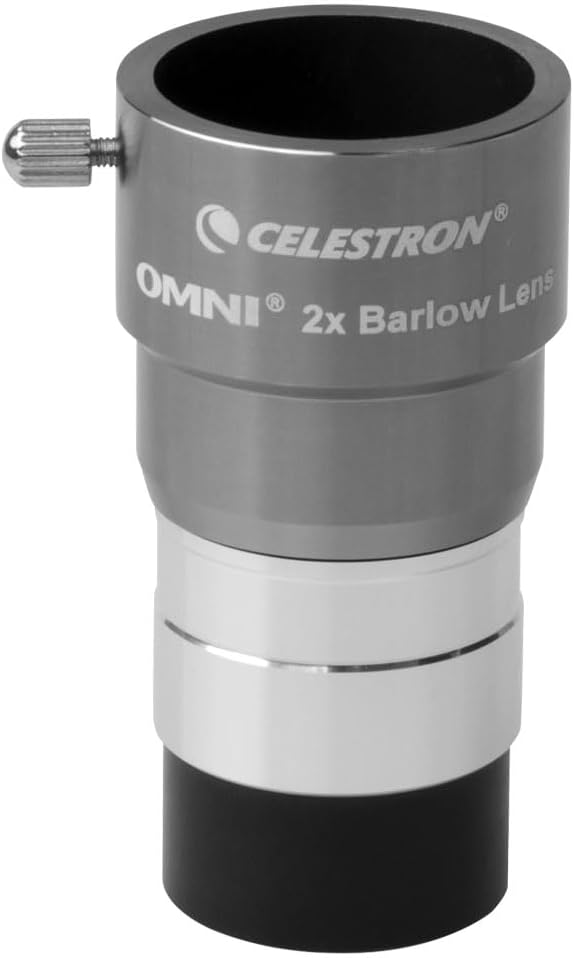
The Celestron Omni 2X doubles the magnification of any eyepiece used with it, making it a versatile addition to your telescoping gear. Ideal for those seeking to expand their viewing power without compromising image quality, this lens exemplifies how a minimal accessory could mean a massive upgrade in viewing details.
Pros
- Easy to use with most eyepieces
- Enhances planetary detail significantly
- Minimal chromatic aberration
- Robust build quality that ensures durability
- Backed by a strong brand reputation
Cons
- Can be slightly heavy, affecting balance
- Not ideal for very wide field eyepieces
Key Features & Benefits
The Celestron Omni 2X Barlow Lens isn’t just about increased magnification; it’s about clear, crisp views without the color distortion often found in lesser quality lenses. With a well-constructed metal barrel, the lens is designed for durability. The set screw facilitates secure attachment of eyepieces, ensuring stability no matter the viewing angle. This peace of mind allows for uninterrupted focus on the stars, not on equipment adjustments.
Amateur astronomers will appreciate the premium quality glass optics, which include a multi-coated lens that encourages brighter, sharper images by increasing light transmission. Whether you’re observing the lunar landscape or Jupiter’s bands and moons, the Celestron Omni 2X makes each viewing a richer, more detailed experience.
Orion Shorty 1.25-Inch 2x Barlow Lens
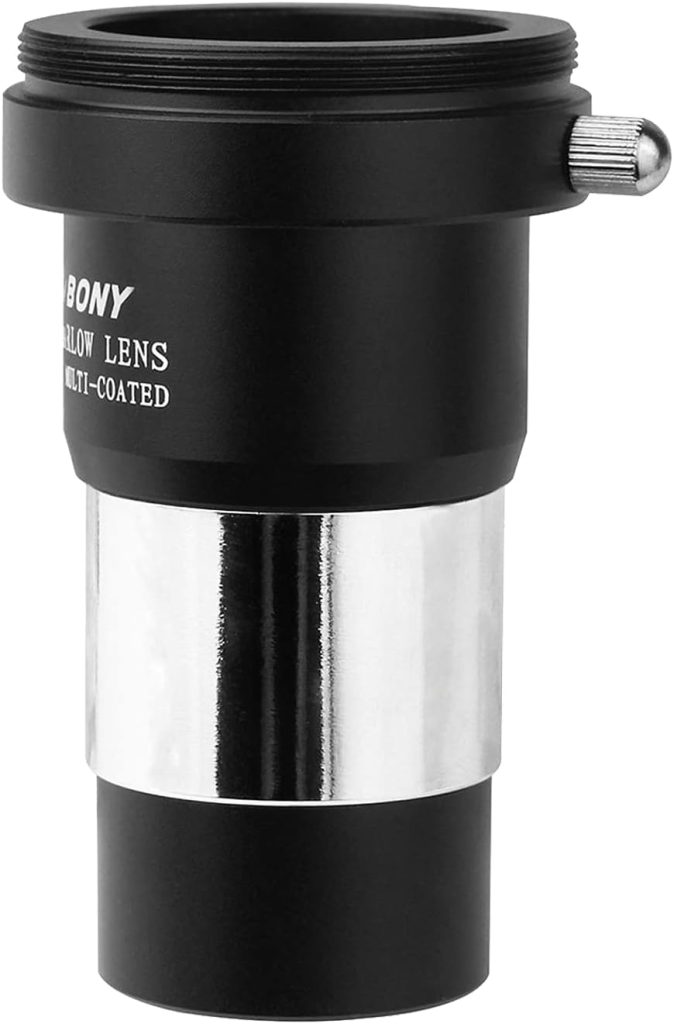
The Orion Shorty Barlow Lens packs powerful performance in a compact size. This lens is a favorite amongst astronomers who prefer a balance between enhanced magnification and portability.
Pros
- Compact and portable
- Doesn’t significantly alter the image balance
- Double the magnification for detailed observations
- Quality lens coatings minimize glare
- Reasonably priced given the high-quality optics
Cons
- Limited to 1.25-inch eyepieces
- Slight learning curve for fitting alignment
Key Features & Benefits
This Barlow lens’s strength lies in its ability to increase magnification without adding much bulk to the telescope setup—ideal for those who travel with their equipment. The multi-coated optics ensure that images remain bright and free of glare, crucial for observing faint objects in dark skies. Its short barrel design is not only practical but also adds to the durability by reducing the potential for bending or damage.
A key benefit of the Orion Shorty is its intuitive balance between enhancing the telescope’s power and maintaining ease of use. This lens allows hobbyists to dive deeper into astrophotography or detailed planetary observation without needing to invest heavily in other advanced optics.
How to Choose the Right Barlow Lens for Telescopes
Selecting the right Barlow lens involves understanding its compatibility with your telescope, the material of the lens, and the kind of celestial observation you’re most interested in. It’s crucial to determine how much additional magnification you need and whether the lens can deliver high-quality views without distortion.
One should also consider the build quality, which impacts the lens’ longevity and performance under various climatic conditions. Furthermore, ease of maintenance and warranty are practical considerations that can influence your choice. Lastly, aligning your budget with these requirements will ensure you find a Barlow lens that not just fits your telescope but also your expectations for spectacular celestial views.
FAQ
- Can a Barlow lens be used with any telescope?Most Barlow lenses are designed to be universally compatible with telescopes that accept 1.25-inch or 2-inch eyepieces. However, checking compatibility with your specific model is always advisable.
- Does using a Barlow lens impact the brightness of celestial bodies?Since a Barlow lens increases magnification, it can spread out the light coming into the telescope, potentially dimming the image. Proper balance between magnification and light intake is key.
- How do I maintain my Barlow lens?Regular cleaning with a soft optical cloth and proper storage when not in use will help maintain the clarity and functionality of your Barlow lens.
- Is a higher-priced Barlow lens always better?Not necessarily. While higher-priced lenses often offer better optics and coatings, significant improvements can also be found in moderately priced lenses suitable for amateur astronomers.
- Can a Barlow lens be used for astrophotography?Yes, a Barlow lens can enhance detail and magnification, making it useful for capturing high-resolution images of the moon, planets, and other celestial bodies.
- What is the main disadvantage of using a Barlow lens?The additional glass can sometimes reduce the clarity of the image, especially if the lens quality is mediocre. Investing in a good quality Barlow lens is crucial for maintaining image integrity.
Conclusion
Barlow lenses are an excellent tool for enhancing the capabilities of your telescope, making them a favorite among astronomers who wish to delve deeper into the cosmos without the need for more complex upgrades. As we’ve seen from models like the Celestron Omni and the Orion Shorty, the choice of lens can have a substantial impact on your stargazing experience, offering improved magnification and image quality.
Remember, the best Barlow lens for your telescope will depend on your specific needs, your existing equipment, and how you intend to use it. By carefully considering these factors and opting for lenses that offer the right balance of performance, build quality, and price, you can ensure many nights of rewarding celestial explorations. No matter which lens you choose, the universe is sure to reveal more of its secrets to you.