

Exploring the Universe: A Guide to Choosing the Best Telescope Eyepieces
Consider the intricate dance of celestial bodies, each moving in perfect synchrony across the night sky. For the astrophotography enthusiast or the amateur astronomer, the telescope is their window to the cosmos, but the choice of eyepiece is what truly brings the universe into clear view. Choosing the perfect telescope eyepiece can be as crucial as the telescope itself. In “Exploring the Universe: A Guide to Choosing the Best Telescope Eyepieces”, we delve deep into the art and science of selecting the right eyepieces to enhance your stargazing adventures, ensuring you capture crisp, detailed celestial views.
A good telescope eyepiece does more than just magnify distant objects. It determines how wide and comfortable your field of view remains, affects the brightness and clarity of celestial objects, and can profoundly impact your overall viewing experience. Therefore, selecting an eyepiece isn’t just about specifications—it’s about matching your personal astronomy goals with the right tools. This guide will explore various options, offering insights into their features, pros, and cons, and help you make informed decisions tailored to your stargazing preferences.
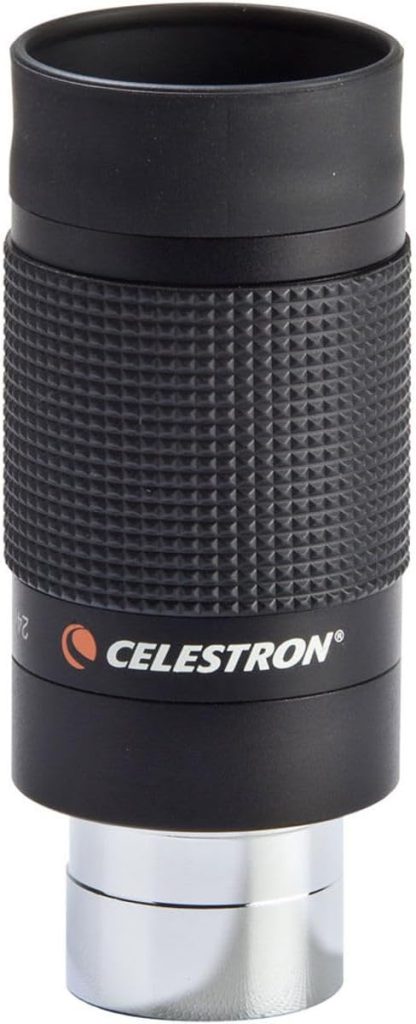
Celestron X-Cel LX Series Eyepiece
The Celestron X-Cel LX series eyepiece is a stellar choice for those looking to upgrade their viewing capabilities without breaking the bank. These eyepieces are known for providing wide fields of view and equipped with comfortable eye relief, making them ideal for extended stargazing sessions. Whether you’re observing the moon’s craters or the rings of Saturn, the X-Cel LX enhances every detail.
Pros
- Wide field of view facilitates immersive observation
- Comfortable eye relief suitable for eyeglass wearers
- Enhanced image quality with multi-coated optics
- Durable construction with rubber grip for easy handling
- Reasonably priced, offering good value for money
Cons
- Limited magnification options compared to higher-end models
- May exhibit slight chromatic aberration at the edge of the field
Key Features & Benefits
The Celestron X-Cel LX series eyepieces are particularly notable for their six-element optical design, which significantly reduces spherical aberration and enhances contrast. This design not only improves viewing quality but also makes the eyepiece adaptable to various types of telescopes, including refractors, reflectors, and Schmidt-Cassegrains.
Another substantial benefit of this series is its 60-degree apparent field of view combined with generous 16mm eye relief. This combination is especially beneficial for observers who wear glasses or those who enjoy viewing comfort without sacrificing field width. Each lens surface is coated multiple times to increase light transmission, thus ensuring brighter images, even under low-light conditions.
Meade Instruments 82° Series Waterproof Eyepiece
Meade Instruments has long been revered in the telescope community for their quality optics, and their 82° Series Waterproof Eyepiece continues this tradition by offering an exceptionally broad field of view and premium build quality, all encapsulated within a waterproof, fog-proof housing. This eyepiece is particularly suited for deep-sky exploration, bringing nebulae and galaxies within reach.
Pros
- Extremely wide 82-degree apparent field of view
- Waterproof and fog-proof for durability in various climates
- Superior light transmission thanks to high index glass
- Comfortable eye relief, even at higher magnifications
- Optimal for detailed, expansive astronomical viewing
Cons
- Higher price point may be a barrier for some beginners
- Bulkier than other eyepieces, which might affect portability
Key Features & Benefits
The Meade Instruments 82° Series eyepieces are engineered to provide an immersive viewing experience, suitable for observing wide-field celestial objects such as star clusters, expansive nebulae, and sweeping galactic structures. The advanced optical design includes extra-low dispersion (ED) glass, which drastically reduces chromatic aberration and delivers exquisitely sharp images.
Moreover, each element within the eyepiece is fully multi-coated, enhancing light transmission and contrast while reducing glare. The result is images that are not only brighter but also more detailed, making it easier to discern subtle features in observed objects. The waterproof and fog-proof design means these eyepieces are built to last, capable of withstanding harsh weather conditions without compromising performance.
How to Choose the Right Exploring the Universe: A Guide to Choosing the Best Telescope Eyepieces
Choosing the best telescope eyepiece for your astronomical explorations requires understanding several key factors:
- Compatibility: Ensure that the eyepiece fits securely and is compatible with your telescope type, whether it’s a reflector, refractor, or compound telescope.
- Field of View: Wider fields of view provide more immersive viewing experiences. Decide what you prefer based on the types of celestial bodies you are most interested in observing.
- Eye Relief: If you wear glasses, look for eyepieces with longer eye relief to maximize comfort during lengthy stargazing sessions.
- Resolution and Contrast: High-quality optics with excellent coatings can significantly improve the resolution and contrast of celestial images.
- Maintenance: Consider how easy it is to maintain and clean the eyepiece, as dust and smudges can impair observational quality.
- Budget: Eyepieces come in a range of prices. Balance cost against the features and quality you need.
FAQ
Q1: Does the size of an eyepiece affect its performance?
A1: Yes, the size often determines the field of view and the amount of light captured. Larger eyepieces typically offer wider views and better illumination.
Q2: Are more expensive eyepieces necessarily better?
A2: Not always. While expensive eyepieces often have superior optics and materials, mid-range models can also provide excellent performance suitable for most amateur astronomers.
Q3: Can I use any eyepiece with my telescope?
A3: Not all eyepieces are compatible with all telescopes. Check the barrel size and fitting before purchasing an eyepiece for your telescope.
Q4: What does eye relief mean in the context of telescope eyepieces?
A4: Eye relief is the distance from the surface of an eyepiece lens to the observer’s eye needed to see the entire field of view. Longer eye relief provides greater comfort, particularly for eyeglass wearers.
Q5: How important are the coatings on an eyepiece?
A5: Coatings are crucial as they reduce glare and improve light transmission, resulting in brighter, clearer images.
Q6: Should I get a collection of eyepieces or just one?
A6: A collection can provide more versatility, allowing you to switch between different magnifications and fields of view depending on what you are observing.
Conclusion
Exploring the cosmos can be a profoundly moving experience, one that is significantly enriched by having the right equipment. Choosing the best telescope eyepieces will not only enhance your viewing experience but also help in achieving a deeper understanding of the universe. In “Exploring the Universe: A Guide to Choosing the Best Telescope Eyepieces”, we’ve navigated through a variety of options, each offering distinct advantages for different types of celestial viewing.
Remember to consider factors like the field of view, compatibility, and eye relief when selecting an eyepiece. Diverse preferences and observing styles mean the best eyepiece is one that closely matches your personal astronomical journey. With the right choice, you’re ready to unlock the secrets of the stars.