
Exploring the Cosmos: How to Choose the Best Beginner Telescope for Deep Space Viewing
Imagine a clear, starlit night where the only limit to your exploration is the quality of your tools. Telescopes, the gateways to the cosmos, offer us a glimpse into the vast expanses of our universe. Selecting the right beginner telescope for deep space viewing not only enhances your stargazing experience but also elevates your understanding of the starry skies. To delve into the wonders of galaxies, nebulae, and star clusters from your backyard, the choice of telescope becomes pivotal.
The universe, with its complex structures and astronomical phenomena, demands precision and clarity from any viewing instrument. The thrill of catching the faint whisper of a distant galaxy or the vibrant bands of Jupiter can turn into frustration if saddled with inadequate equipment. Thus, in this comprehensive guide, we explore essential considerations and recommend some of the best beginner telescopes suited for peeking beyond our earthly borders into the deeper cosmos.
Celestron StarSense Explorer DX 130AZ
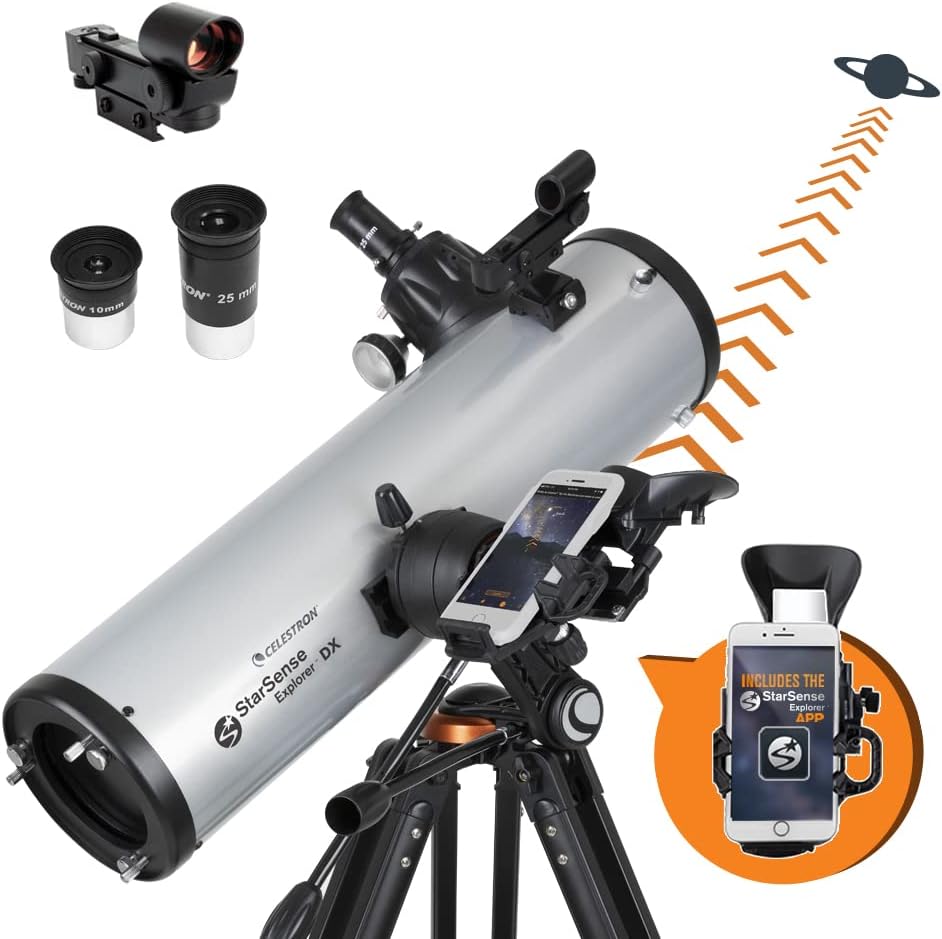
The Celestron StarSense Explorer DX 130AZ revolutionizes how beginners interact with the night sky. Featuring Celestron’s patented StarSense technology, which uses your smartphone to align the telescope automatically, this device makes deep space observation accessible and fun.
Pros
- Automated StarSense Sky Recognition
- Ease of use with smartphone integration
- 130mm aperture provides striking clarity and detail
- Lightweight and portable frame
- Includes a plethora of accessories
- Affordable entry into serious astronomy
Cons
- Dependent on smartphone compatibility
- Manual altitude adjustment
Key Features & Benefits
The StarSense Explorer DX 130AZ by Celestron stands out for its innovative use of smartphone technology to guide users to stars and galaxies, making it especially appealing for tech-savvy beginners. The quality optics, featuring a 130mm aperture, gather ample light to reveal deep-space wonders like the Orion Nebulae in striking detail. A sturdy mount supports precise navigation, while the telescope remains light enough for spontaneous stargazing adventures.
Additionally, Celestron includes a range of accessories, such as eyepieces and a finderscope, enhancing both lunar and deep-space viewing capabilities straight out of the box. This telescope offers a satisfying blend of technology, user-friendliness, and deep-space capability, making it a perfect starting point for those eager to delve into astronomy without overwhelming technical demands.
Orion SkyQuest XT8 Classic Dobsonian Telescope
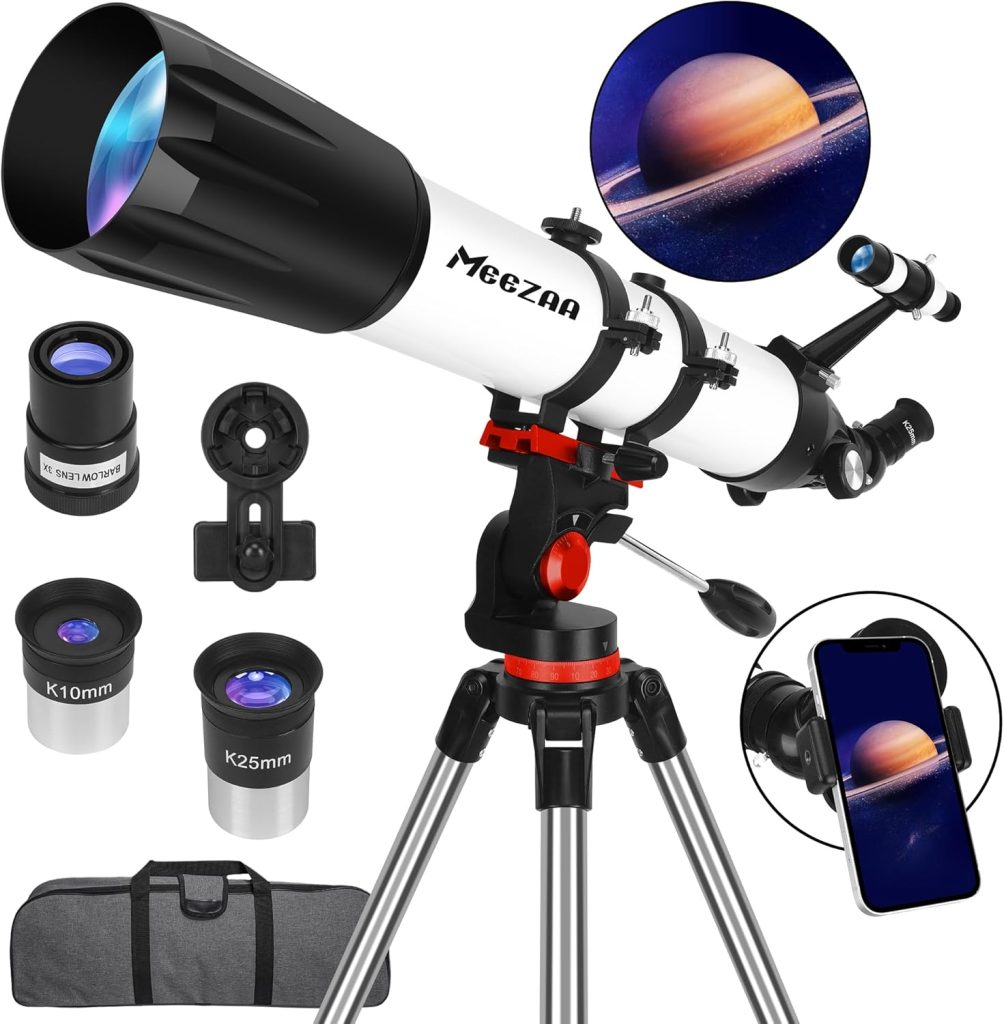
Marked by its robust design and exceptional light-gathering capabilities, the Orion SkyQuest XT8 Classic is a favorite among novice astronomers who aim to start on a high note. Its traditional Dobsonian design emphasizes simplicity and efficiency.
Pros
- 8-inch aperture captures extensive celestial detail
- Sturdy and stable Dobsonian base
- Easy to operate with smooth navigation controls
- Ideal for viewing planets and deep-sky objects
- Reasonably priced for its large aperture
Cons
- Bulkier design reduces portability
- Lacks automated technologies
Key Features & Benefits
Orion’s SkyQuest XT8 offers a generous 8-inch aperture—a feature that pulls in significant amounts of light, revealing the faint structures of galaxies and nebulae with more clarity than smaller models. This telescope does not rely on digital tools, which makes it fantastic for learning manual stargazing techniques, such as star-hopping. Its sturdy mount enhances stability, a crucial factor when stargazing during gusty nights.
The ease of use intertwined with the powerful optical capabilities makes the XT8 an astute choice for serious beginners. The commitment to traditional telescope mechanics means that this model will patiently accompany you while your celestial navigation skills flourish.
Buying Guide: How to Choose the Right Telescope for Deep Space Viewing
When venturing into the world of astronomy, the array of telescope choices can be overwhelming. Here are several key factors to consider when selecting your beginner telescope:
Aperture
The aperture is crucial as it determines how much light the telescope can gather; the larger the aperture, the more light it collects, and the better the image clarity, especially important for deep space objects.
Magnification
While a high magnification seems advantageous, it’s the quality of the optics and the aperture that often dictate the limits of useful magnification. A telescope with excellent light-gathering ability and moderate magnification often yields the best results.
Mount Type
Equatorial and Altazimuth are the two main types of mounts. Equatorial mounts are suited for tracking celestial objects as the Earth rotates, which is beneficial for long exposure astrophotography. Altazimuth mounts, however, are simpler to use and generally more appropriate for beginners.
Portability
If you plan to transport your telescope to dark-sky locations, consider its size and weight. Larger, bulkier telescopes offer better viewing capabilities but can be challenging to move and set up.
Durability and Quality
Invest in a telescope with a strong, stable mount and high-quality optics. Cheaper models might offer a broader range of features but often fall short in the stability required for clear galactic viewing.
FAQ
What is the best telescope to see galaxies?
Telescopes with larger apertures and high-quality optics are generally better for viewing galaxies. Models like the Orion SkyQuest XT8 have large mirrors which collect enough light to view deep-space objects distinctly.
Can I view planets with these telescopes?
Yes, all the telescopes listed here are capable of planetary viewing, but their primary strength lies in deep-space viewing.
Do I need additional accessories to start using these telescopes?
While basic accessories like eyepieces and a finderscope are often included, you may need to invest in additional higher-quality eyepieces or a Barlow lens to enhance your viewing experience.
Are these telescopes suitable for children?
Telescopes like the Celestron StarSense Explorer are user-friendly and suitable for older children under supervision, but younger children might find them complex.
How important is the telescope’s focal ratio?
The focal ratio impacts the field of view and image brightness. A lower focal ratio (f/5) provides a wide field of view and is often preferred for deep-space observation.
Is astrophotography possible with these beginner telescopes?
While some entry-level options offer astrophotography capabilities, specially designed astrophotography telescopes will yield better results.
Conclusion
The vastness of space offers an unlimited canvas for discovery, and having the right telescope can dramatically enhance the experience. Whether you choose the high-tech Celestron with its smartphone integration or the classic manual functionality of the Orion SkyQuest, each has its unique strengths tailored to different facets of beginner astronomy. As you embark on this fascinating journey through the cosmos, remember that the best telescope is one that matches your personal interests in astronomy and fits your practical needs. Clear skies and happy stargazing!