
Discovering the Cosmos: Choosing the Best Beginner Telescope for Planets
Stargazing is an activity that newly captured imaginations often pursue, yet the multitude of telescope choices can overwhelm a beginner. Each telescope has a unique set of features suited to different celestial interests, and for those particularly enchanted by the planets, choosing the right telescope is crucial. Embarking on the journey of planetary observation requires a beginner’s telescope that not only magnifies the beauty of Saturn’s rings or Jupiter’s moons but also inspires continuous learning and discovery.
Exploring the cosmos can be one of the most exhilarating experiences, particularly when the view through your telescope lens brings planets into startling clarity. The best beginner telescopes for viewing planets are specifically designed to enhance your nighttime viewing experience without requiring advanced knowledge in astrophysics. Through this guide, you’ll uncover the top models that balance ease of use, quality of components, and cost, helping you step into the universe of astronomy with confidence.
Celestron NexStar 5 SE Telescope
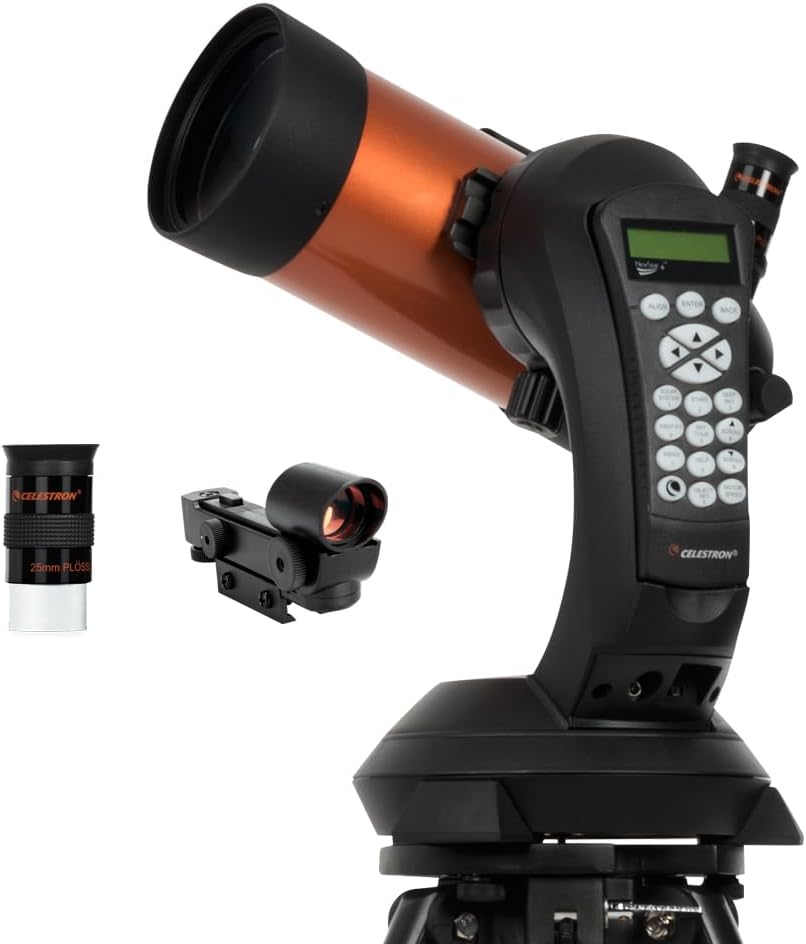
Perfect for the tech-savvy stargazer who values a balance of portability and advanced features, the Celestron NexStar 5 SE makes discovering planetary details a breeze with its computerized mount and extensive database of celestial objects.
Pros
- User-friendly computerized tracking system
- Compact and portable design
- Excellent optics with StarBright XLT coatings
- Internal battery compartment
- Expandable with accessories
Cons
- Higher price point for beginners
- Requires power supply for longer observations
Key Features & Benefits
The Celestron NexStar 5 SE stands out with its automated GoTo mount that allows users to align and automatically locate over 40,000 celestial bodies, making it an excellent choice for beginners eager to explore without the hassle of manual adjustments. The telescope’s 125mm aperture is ample for clear, crisp views of planets, showcasing details like the cloud bands on Jupiter and the rings of Saturn with high contrast and clarity. The combination of portability and power makes this telescope an attractive option not just for home use but also for taking to dark sky locations.
Another significant advantage is the NexStar 5 SE’s compatibility with a wide range of Celestron accessories, which makes it a versatile investment. Whether upgrading the eyepiece for higher magnification or attaching a camera for astrophotography, this telescope grows with your stargazing skills and interests. Despite its advanced features, the setup remains straightforward, encouraging even the most technology-averse users to conquer its learning curve swiftly.
Orion StarBlast 4.5 Astro Reflector Telescope
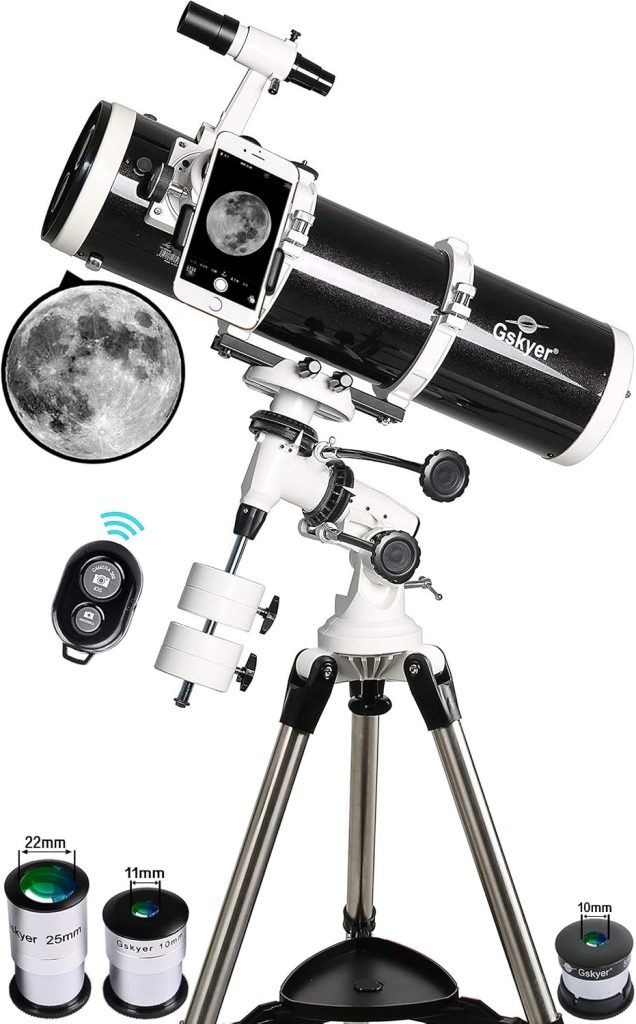
For those who prefer a hands-on approach to astronomy, the Orion StarBlast 4.5 Astro Reflector Telescope offers an impressive introduction. Its tabletop design is not only a significant space-saver but also beginner-friendly, ensuring smooth manual navigation of the night sky.
Pros
- Compact and lightweight
- Easy setup, suitable for children as well
- No need for a power source
- Sturdy construction
- Great value for money
Cons
- Limited upgradeability
- Some chromatic aberration
Key Features & Benefits
The Orion StarBlast 4.5 is a favorite among beginners for its solid optical quality and user-friendly operation. It features a 4.5-inch aperture that provides bright, sharp images of the solar system’s larger planets. The reflector’s base is designed to sit securely on almost any flat surface, making it perfect for impromptu backyard observing sessions. Its simplicity encourages young astronomers to explore without feeling overwhelmed by complex features.
This model excels in offering a straightforward, no-frills approach to astronomy, which can be particularly appealing when just starting. It gives clear night views that ignite passion for the skies, with enough clarity to distinguish between different planetary features and moons. While it may not offer computerized controls, its manual operation is highly intuitive, which helps in developing fundamental stargazing skills.
How to Choose the Right Discovering the Cosmos: Choosing the Best Beginner Telescope for Planets
Selecting the ideal beginner telescope for observing planets involves understanding several key points. An essential factor is the telescope’s aperture, the diameter of the primary lens or mirror, which affects how much light the telescope can gather. More light means better detail and clearer images of planets. Equally important is the type of telescope – refractor, reflector, and compound – each offering distinct advantages depending on your observational interests.
Build quality is critical, especially if you plan to frequently transport the telescope for better viewing locations. Look for durable materials and stable mount designs. Consider telescopes that offer growth through expandability, allowing upgrades like improved eyepieces or attachment of a camera for astrophotography.
Usability should not be overlooked. As a beginner, it’s vital that your telescope does not require extreme expertise to set up and use. Many modern telescopes now come with computerized mounts which, although more expensive, can provide automatic tracking of celestial bodies – a huge plus for any beginner. Budget, while last on this list, is no less important. Determine what features you most need and balance that with how much you are willing to invest.
FAQ
1. What is the best type of telescope for viewing planets for beginners?
Refractor telescopes are generally recommended for beginners interested in planetary viewing due to their ease of use and reliable image quality.
2. How much should I spend on my first telescope?
It is possible to find quality beginner telescopes for under $200, but investing between $200 to $500 can provide more features and better image quality.
3. Are computerized telescopes worth the extra cost?
For beginners interested in a more straightforward learning path, computerized telescopes are worth the investment as they make locating and tracking celestial objects much easier.
4. Can telescopes be used for both daytime and nighttime viewing?
Yes, many telescopes, especially refractor models, are suitable for both, but specific attachments might be necessary for optimal daytime usage.
5. What accessories should I consider purchasing with my first telescope?
Consider additional eyepieces for greater magnification variety, a reliable tripod, and possibly a Barlow lens to increase the magnification power of your eyepieces.
6. How important is aperture when choosing a beginner’s telescope?
Aperture is crucial as it determines the amount of light captured by the telescope, directly influencing how well you can see and the details in the planets and other celestials bodies.
Conclusion
Choosing your first telescope is an exciting step into a larger universe. Picking the right model will not just expand your night skies literally but will broaden your understanding of the cosmos metaphysically. Each of the telescopes reviewed promises a gateway to the planets and stars, with specific features suited to different inclinations, whether you lean towards detailed planetary viewing or broader celestial explorations. Remember, the best telescope for you is one that you will use eagerly and regularly, motivated by the breathtaking beauty and complex mysteries of the cosmos.
As your skills advance, a telescope can become a lifelong companion on a continuous celestial journey. Whether you’re watching the serene dance of Jupiter’s moons or capturing the stoic rings of Saturn, your telescope is the key to unlocking these cosmic spectacles. Choose wisely, and prepare to be amazed by the wonders of our universe.