
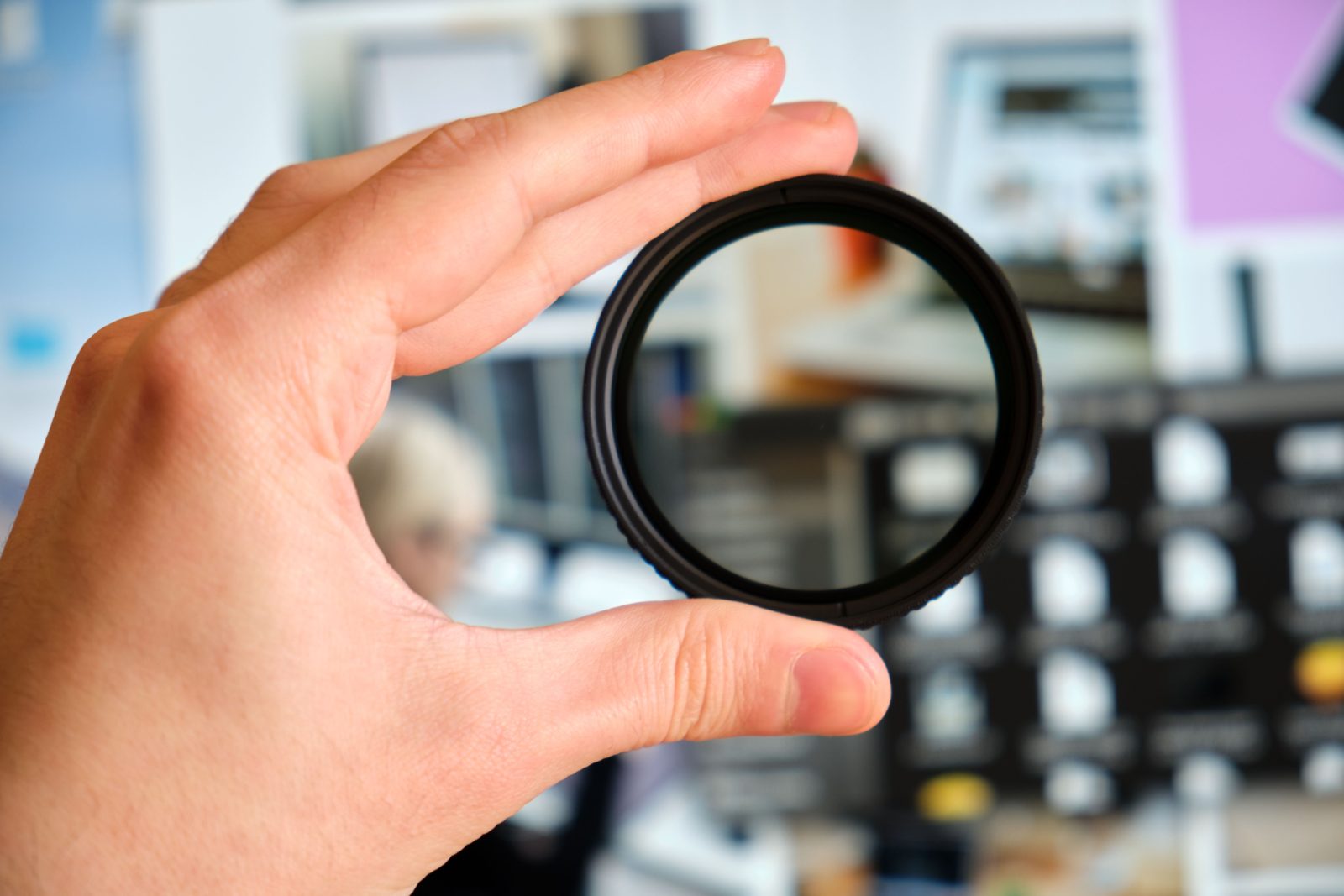
Unlocking the Stars: How to Choose the Best Telescope Filters for Astrophotography
An early passion or fascination for the cosmos often starts with a simple glance through a telescope. But as amateur astronomers delve deeper, they quickly realize that to truly unlock the beauty of the stars and take stunning celestial photographs, the right equipment is essential. Among these, telescope filters play a crucial role in enhancing the quality of images captured through astrophotography. These filters can modify light entering the telescope, improving contrast, and emphasizing specific wavelengths of light, thus making certain astronomical features stand out.
However, with various types and brands of telescope filters available—such as those from Celestron, Orion, and Baader—it can be a challenge to discern which filters are best suited for your astrophotography needs. This guide aims to offer insights and recommendations to help you make the most informed decision in your pursuit of capturing the cosmos.
Svbony SV139 Telescope Filter
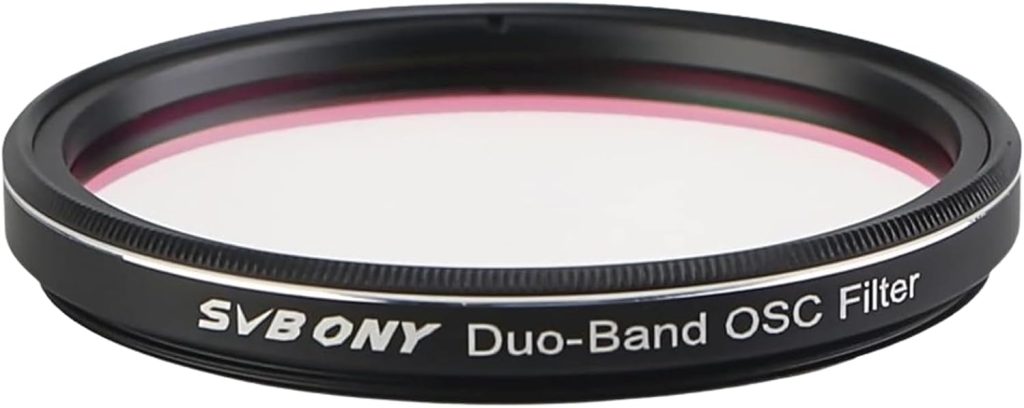
The Svbony SV139 stands out primarily for its ability to enhance contrast between the planets and the blackness of space, making it an exceptional choice for astrophotographers focusing on planetary imaging.
Pros
- Exceptional contrast enhancement
- Reduces glare effectively
- High-quality optical glass
- Universal threading for broad compatibility
- Reasonably priced, offering great value
Cons
- Not ideal for deep sky photography
- Can produce a slight color shift which might require post-processing adjustment
Key Features & Benefits
The Svbony SV139’s strong suit is its premium optical glass, which substantially reduces glare from planetary surfaces, thereby allowing finer details to come through more clearly in photographs. Additionally, its universal threading means that it can easily fit most telescope models without necessitating special adapters. The exceptional contrast management makes it a superb option for anyone looking to enhance the clarity and details of planets.
Given its competitive pricing, the SV139 is an appealing option not only for seasoned astrophotographers but also for beginners who wish to experiment without breaking the bank. The color shift it introduces is generally a manageable issue, as it can often be corrected during the image processing phase. This slight inconvenience is a small price to pay for the overall quality and performance of the filter.
Orion 5560 1.25-Inch Variable Polarizing Filter
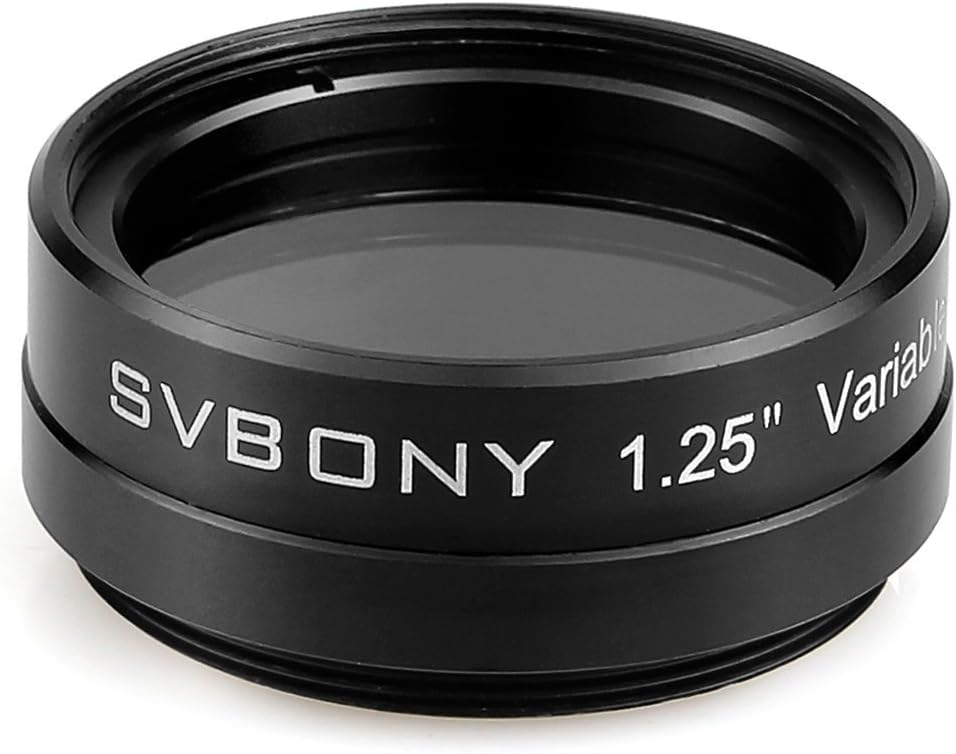
For those who often find themselves battling with the brightness of celestial objects, the Orion 5560 Variable Polarizing Filter presents a perfect solution. This filter is specifically designed to reduce the amount of light coming into your telescope, which makes it ideal for lunar and planetary photography.
Pros
- Adjustable light transmission for perfect exposure
- Excellent build quality
- Easy to use with different telescope eyepieces
- Enhances the visibility of moon and planets
- Minimizes eye strain during long observation sessions
Cons
- More expensive than some non-adjustable filters
- May be overkill for dimmer objects
Key Features & Benefits
The variable feature of the Orion 5560 allows astronomers to adjust the level of light transmission from 1% to 40%, providing unmatched versatility in managing visual and photographic exposure. This is particularly beneficial when observing and capturing images of the moon, where excessive brightness can often obscure surface details. Moreover, this filter also helps reduce eye strain significantly, which is a common complaint during prolonged viewing sessions.
The filter’s ease of integration with various eyepieces also means that it is not only a useful tool for photographers but also for those who enjoy visual observation. While the price point may be higher, the quality and adjustability it offers make it a worthwhile investment for anyone serious about astrophotography and observational astronomy.
How to Choose the Right Unlocking the Stars: How to Choose the Best Telescope Filters for Astrophotography
Choosing the right telescope filter for astrophotography involves considering multiple factors:
- Compatibility: Ensure the filter fits your existing telescope setup.
- Material: High-quality glass filters typically offer superior image quality over their plastic counterparts.
- Performance: Evaluate what celestial objects you most frequently photograph and choose a filter that enhances those specific wavelengths or objects.
- Budget: Filters come in a range of prices, so consider how often you’ll use them and if the investment is justified.
- Features: Some filters, like the variable polarizing filter, offer adjustable features that could enhance both your viewing and photographic experience.
- Build Quality: Durable filters that can withstand frequent use are a better long-term investment.
FAQ
What does a telescope filter do?
A telescope filter modifies the light entering the telescope to enhance image contrast, block unwanted light, or emphasize specific wavelengths, which can help in observing particular features of celestial objects.
Can any filter fit any telescope?
Most filters come with a standard thread size but checking compatibility with your telescope’s eyepiece or camera adapter is crucial before purchase.
Are more expensive filters always better?
Not necessarily. While pricier options often offer higher quality and features, mid-range priced filters can also provide excellent results depending on your specific needs.
Is a polarizing filter necessary for astrophotography?
While not necessary, a polarizing filter can be invaluable for photographing bright objects like the moon, as it allows you to manage glare and enhance surface detail.
How do I care for my telescope filters?
Store them in a clean, dry place and clean them gently with a proper optical cloth to avoid scratching the glass.
Can I use multiple filters at once?
Yes, some astronomers use combinations of filters to get the desired effects, although this might require some experimentation to see which combinations work best for your objectives.
Conclusion
Astrophotography is a captivating endeavor that invites us to capture the ethereal beauty of the night sky. The right set of telescope filters can make a significant difference in the quality and clarity of your celestial images. By choosing filters that cater to the specific needs of your observational targets and fitting them to your telescope setup, you can enhance your experience and outcomes in astrophotography.
Whether you’re a novice looking to get started with your first filter or a seasoned astronomer seeking to upgrade your arsenal, understanding the nuances of what each filter can do will help you make the best choices. Remember, the best filter is the one that fits your personal astronomy goals, gear, and budget, while enhancing your view of the universe.