

Unlock the Stars: A Guide to the Best Computerized Telescope Mounts
Imagine peering deep into the cosmos, where planets, stars, and galaxies reside in vast, silent beauty. For astronomy enthusiasts, this isn’t just a dream—it’s a nightly pursuit made possible by the right equipment. Central to this journey is the computerized telescope mount, a marvel of technology that accurately points and tracks celestial objects across the sky. Finding the right computerized mount can dramatically enhance your stargazing experience, allowing you to unlock the secrets of the stars with precision and ease.
In this guide, we dive deep into the world of computerized telescope mounts, presenting top picks that bring the universe to your backyard. From user-friendly models for beginners to advanced systems for seasoned astronomers, each mount has been selected to help you navigate the night sky more effectively. Let’s explore these stellar companions and find the perfect mount to elevate your celestial adventures.
Celestron Advanced VX Computerized Mount
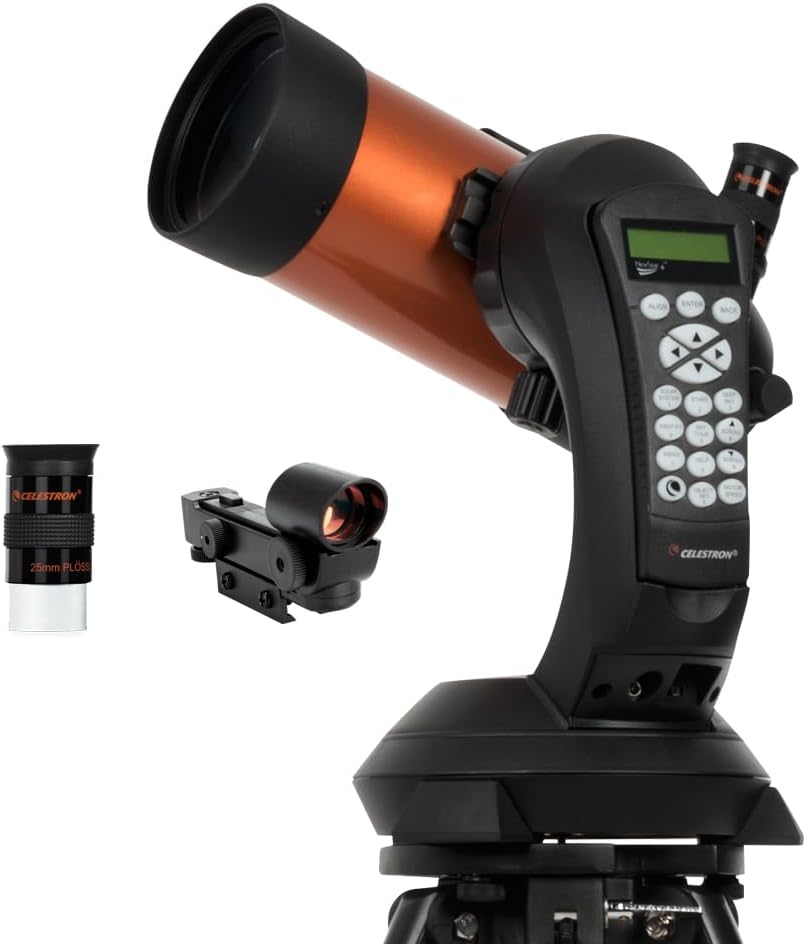
The Celestron Advanced VX Mount strikes a harmonious balance between innovation and ease of use, making it a favorite among both novice and experienced astronomers.
Pros
- Ideal for mid-sized telescopes
- Enhanced motors offer more tracking power
- Improved industrial design boosts durability
- Simple setup process
- Highly compatible with various telescope models
Cons
- May require additional counterweights for heavier setups
- Hand controller can be complex for beginners
Key Features & Benefits
The Advanced VX mount features Celestron’s All-Star Polar Alignment, which simplifies the polar alignment process to deliver fast and accurate tracking. This technology is pivotal, particularly for long exposure astrophotography, where precision is crucial. Its sturdy build not only increases its lifespan but also ensures stability, reducing vibrations that can affect observational quality. This model’s versatility is evident in its compatibility, supporting a wide range of telescopes—perfect for astronomers looking to upgrade their setup without buying a new mount.
Additionally, the Celestron Advanced VX adapts well to different environments, from dark rural backyards to suburban skies, thanks to its advanced electronics and motors. The improved design allows for heavier payloads, accommodating a variety of optical tubes and cameras without sacrificing performance. This adaptability makes it an excellent choice for those who enjoy diverse observational pursuits, from planetary viewing to deep-sky photography.
Sky-Watcher SynScan AZ Mount
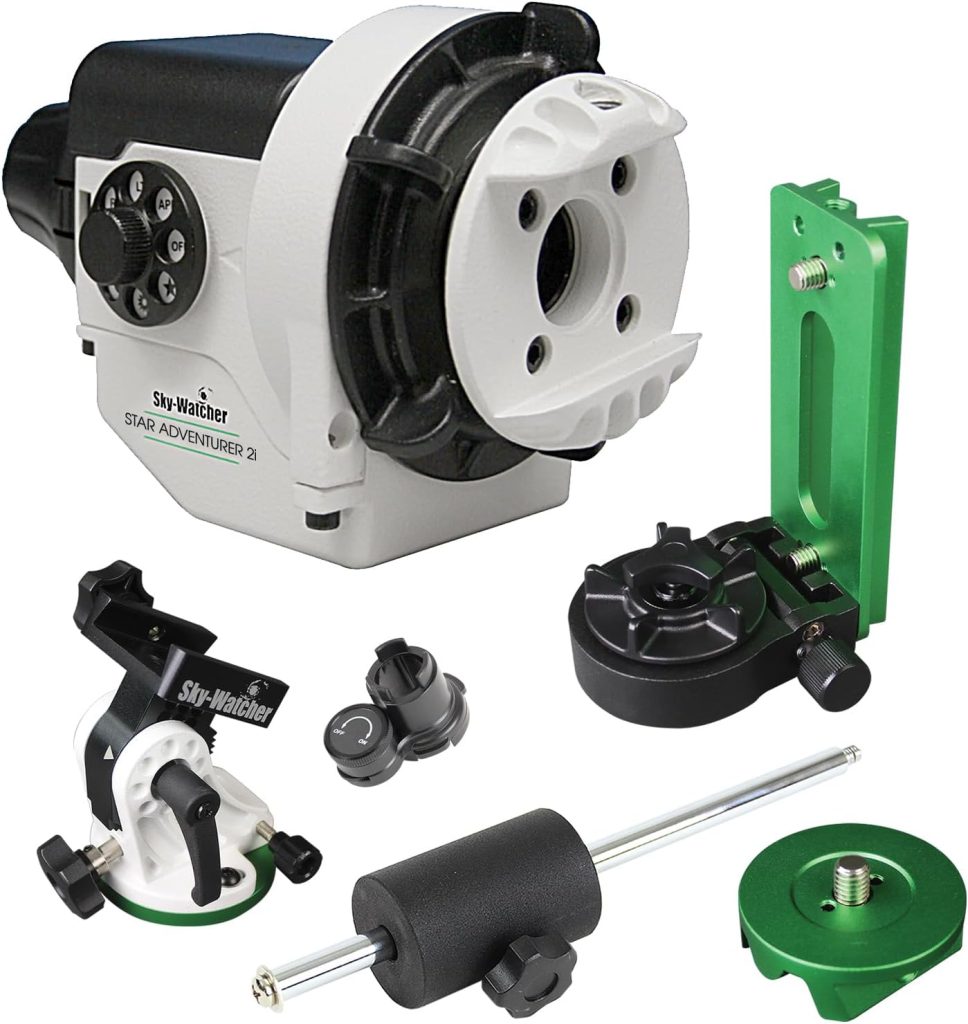
The Sky-Watcher SynScan AZ Mount delivers a user-friendly interface combined with a database rich with 42,900 celestial objects, making it a stellar gateway for beginners to explore astronomy.
Pros
- Extensive object database
- Intuitive SynScan hand controller
- WiFi capability enhances ease of use
- Robust construction
- Relatively lightweight for portability
Cons
- Setup can be time-intensive initially
- Less suitable for very heavy telescopes
Key Features & Benefits
The Sky-Watcher SynScan AZ is not only about the extensive celestial database but also about the user experience. The WiFi functionality allows you to control your telescope via a smartphone, translating into a more accessible and compact setup without the need for a wired hand controller. This feature is particularly beneficial for educational groups or public viewing events where multiple people may be interacting with the telescope.
This mount’s design emphasizes both durability and portability, which is an excellent advantage for astronomers who frequently travel to dark-sky locations. Although it is light enough to carry between locations, it remains stable under the stars, providing a reliable foundation for a broad spectrum of telescopes tailored to observing the Moon, planets, or fainter deep-sky objects.
iOptron SmartEQ Pro Mount
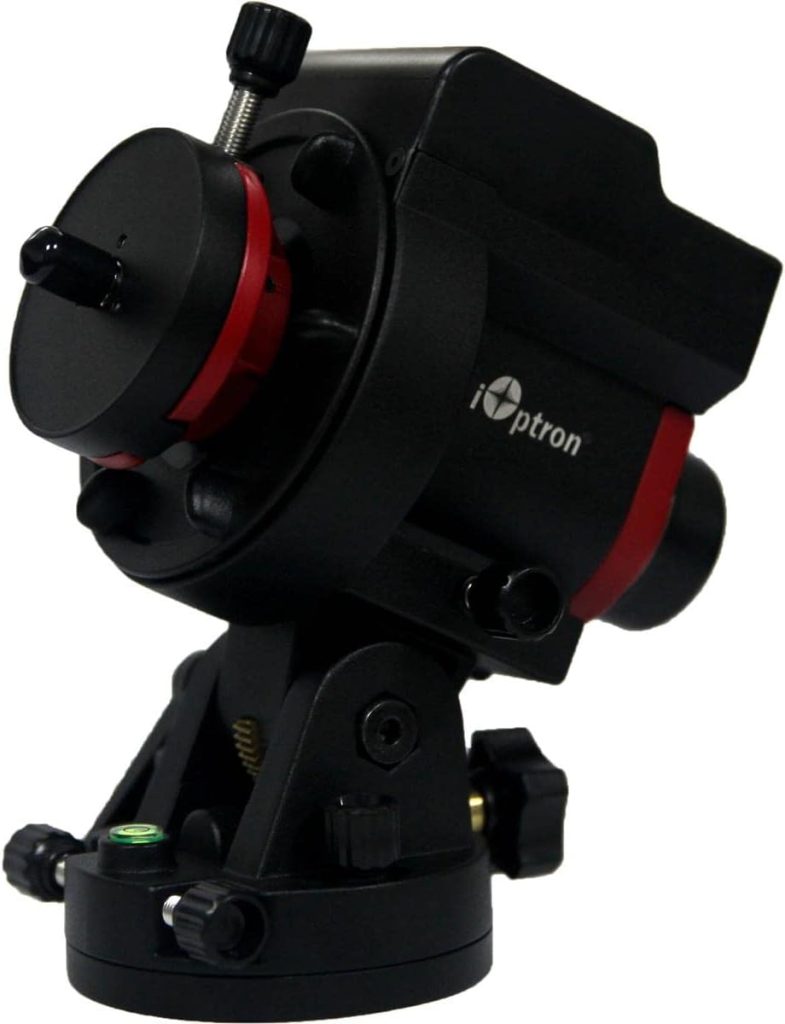
For astrophotographers looking to travel light without compromising on tracking accuracy, the iOptron SmartEQ Pro proves to be an indispensable companion. This mount blends portability with specialized features for the astrophotography aficionado.
Pros
- Ultra-portable design
- Precision tracking with built-in GPS
- Integrated polar scope aids quick alignment
- Supports solar, lunar, and celestial tracking
- Quiet in operation
Cons
- Not suitable for larger, heavier telescopes
- Battery life could be improved
Key Features & Benefits
The iOptron SmartEQ Pro stands out with its precise tracking capabilities, essential for capturing clear, detailed images of celestial objects. Its built-in GPS receivers automatically determine the mount’s position, streamlining the setup process particularly at new observing sites. The inclusion of a polar scope further enhances this alignment efficiency, which is critical in achieving precise tracking over extended periods.
Despite its lightweight, the SmartEQ Pro does not compromise stability. Its robust mechanical structure supports a substantial amount of equipment relative to its size, making it an excellent choice for astrophotographers who need a reliable mount that is easy to transport. This portability is a significant benefit, enabling spontaneous stargazing adventures or planned trips to secluded dark skies.
How to Choose the Right Unlock the Stars: A Guide to the Best Computerized Telescope Mounts
Choosing the right computerized telescope mount involves several considerations to ensure you get the most out of your stargazing experiences. Here are key factors to bear in mind:
- Compatibility: The mount you choose must be compatible with the optical tube and other equipment you plan to use. Check the payload capacity and mounting bracket system.
- Performance: For astrophotography, look for mounts with precise tracking capabilities and minimal vibration.
- Portability: If you plan on traveling to different stargazing spots, consider lighter mounts that are easy to transport and set up.
- Features: Additional features such as GPS, GoTo capability, and dual-mode operation (Alt-Azimuth and Equatorial) can enhance your viewing experience.
- Budget: Mounts can vary significantly in price. Determine your budget beforehand and consider what features you are willing to invest in.
FAQ
- How important is the weight capacity of a computerized mount?
It’s critical as it determines the types of telescopes and accessories the mount can support, which impacts both performance and ease of use. - Can I upgrade my computerized mount over time?
Yes, many mounts have modular designs allowing for upgrades like larger motors or additional computerized features. - What power sources do these mounts require?
Most computerized mounts run on AC power or battery packs, so it’s important to understand the power requirements for your particular model. - Is a computerized mount suitable for beginners?
Yes, some models are very user-friendly and can make stargazing more accessible for beginners. - Do all computerized mounts come with a warranty?
Not all, but most reputable brands offer warranties. Check the warranty details before purchasing. - How do I care for my mount to ensure longevity?
Regular maintenance, such as cleaning and tightening loose components, is essential, along with proper storage when not in use.
Conclusion
Embarking on celestial observations can be one of the most
exhilarating hobbies, and the right computerized telescope mount is your gateway to the stars. Each mount featured in this guide offers unique benefits tailored to different types of astronomers—from beginners to advanced users. Consider what aspects are most important to your stargazing needs, whether it’s portability for travel, advanced tracking capabilities for astrophotography, or a user-friendly interface for family use.
If you’re starting out, a mount like the Sky-Watcher SynScan AZ can offer a smooth introduction, while the Orion Atlas Pro could be your high-end companion for deeper astronomic ventures. No matter your choice, each step you take brings you closer to understanding the vast universe. So align your telescope, calibrate your mount, and prepare to unlock the mysteries of the cosmos.