

Best Telescopes for Deep Space Observation: Unveiling the Cosmos
The cosmos beckons every stargazer with its enigmatic beauty and timeless mysteries. Imagine if we could breach these vast distances from our backyards, light-years transforming into mere moments of awe. Deep space observation is not just a hobby; it is a doorway to the wonders of the universe, accessible with the right telescope. From galaxies swirling in graceful chaos to nebulae crafting the cradle of stars, the night sky offers an infinite spectacle that is profoundly humbling.
Yet, the choice of telescope is crucial. With numerous models boasting varying features and capabilities, it can be overwhelming for beginners and casual readers seeking to embark on this cosmic journey. Our aim here is to demystify these choices, ensuring that your stargazing experience magnifies the universe’s majesty without diminishing your budget or enthusiasm.
This article explores top telescopes recommended for peering beyond our celestial neighborhood, shedding light on what makes each ideal for deep space observation. Whether you are a novice eager to glimpse your first nebula or a seasoned observer plotting galaxies, the following selections promise to enhance your exploratory quests into the deep cosmos.
Criteria for Selection
Before diving into our list, let’s address why certain telescopes are more suited for deep space observation. Factors like aperture size, optical quality, and stability play crucial roles. A larger aperture allows more light to enter the telescope, essential for viewing distant, faint objects. Optical quality ensures that the light is accurately focused, capturing clearer, more detailed images. Additionally, a stable mount is imperative to support these heavier optics and retain precise alignment amidst long observation sessions.
1. Celestron NexStar 8SE Telescope
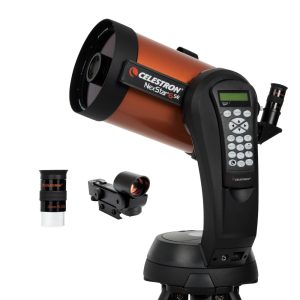
The Celestron NexStar 8SE stands out as a versatile entry-level telescope that belies its simplicity with powerful capabilities. Equipped with an 8-inch aperture, it strikes a commendable balance between user-friendliness and the capacity to capture distant celestial bodies. Its automated go-to mount allows users to automatically slew the telescope to thousands of objects cataloged in its database, making it a favorite among beginners and those who value convenience.
Key Benefits
- Large 8-inch aperture gathers ample light for deep space viewing.
- Fully automated go-to mount facilitates easy navigation of the night sky.
- Compact and portable design makes it easy to transport and set up.
2. Orion SkyQuest XT10i IntelliScope Dobsonian Telescope
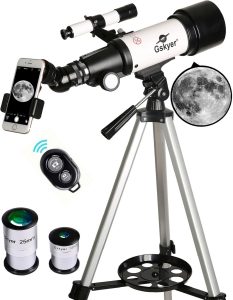
The Orion SkyQuest XT10i is a Dobsonian telescope that combines simplicity with serious aperture. With a 10-inch diameter, it provides brilliant views of deep-sky objects. The IntelliScope Computerized Object Locator guides users to over 14,000 celestial wonders, making it not just powerful but also an educational tool for the skies.
Key Benefits
- Substantial 10-inch aperture offers exceptional clarity and detail.
- IntelliScope locator aids in finding elusive deep-space objects.
- User-friendly design ideal for newcomers and enthusiast astronomers alike.
3. Sky-Watcher EvoStar 120 APO Doublet Refractor
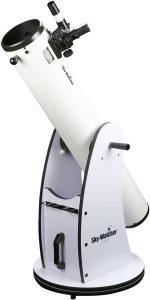
If precision and contrast in your cosmic observations are what you seek, the Sky-Watcher EvoStar 120 APO is your telescope. Known for its superb chromatic aberration correction, the APO doublet refractor design is favored for its sharp and high-contrast visuals of both planetary and deep-space objects.
Key Benefits
- Excellent chromatic aberration correction for sharp images.
- Portable and robust design fit for serious stargazers.
- High-quality optics suitable for both astrophotography and visual observations.
Expert Tips
To enhance your experience, always align your telescope accurately before each observing session. Additionally, invest in a good set of eyepieces as they can significantly improve the image quality and range of your observations. Lastly, ensure your observation area is as dark as possible to maximize the visibility of faint objects.
Common Mistakes to Avoid
One of the most frequent errors beginners make is neglecting the importance of a stable mount. A shaky mount can render a large aperture useless. Another common oversight is impatience with alignment procedures. Proper setup is key to a rewarding stargazing experience.
Frequently Asked Questions
What is the best telescope for beginners interested in deep space?
The Celestron NexStar 8SE offers a great mix of ease of use and deep space capability, making it ideal for beginners.
Can you suggest a telescope for both planetary and deep space observation?
The Sky-Watcher EvoStar 120 APO Doublet Refractor is highly recommended for its versatility in viewing both planetary detail and deep space wonders.
How important is aperture in a deep space telescope?
Aperture is crucial as it determines how much light the telescope can gather, which directly affects its ability to see and resolve distant and faint objects in deep space.
What accessories should I consider purchasing with my telescope?
Consider getting additional eyepieces, a more robust mount, and possibly filters that help view objects in different lights and wavelengths.
Final Thoughts
Embarking on the path of deep space observation can transform your appreciation of the universe. The telescopes listed above provide various options that cater to different needs and budgets, all capable of unveiling the mysteries of the cosmos. As you prepare to explore the night sky, remember that each telescope offers a unique window into our incredible universe—choose the one that best fits your celestial curiosities and practical requirements.