
Best Telescopes for Beginners: Explore the Stars with Ease
Have you ever looked up at the night sky and wished you could see the craters of the moon or the rings of Saturn up close? A telescope can be your passport to these amazing views, but for beginners, the plethora of choices can be daunting. Understanding your specific needs and expectations from a telescope is crucial before making a purchase. In this article, we aim to simplify this choice. We will explore a variety of telescopes that are ideal for novice astronomers, ensuring you find one that fits your celestial interests perfectly.
Choosing the right telescope as a beginner isn’t just about buying the most powerful one you can find. It’s about finding a balance between functionality, ease of use, and price. A good beginner’s telescope should be straightforward enough not to discourage you with a complex setup or operation. Being equipped with the right knowledge will transform your stargazing experience from frustrating to fascinating.
So, why specifically these models? Each telescope listed has been chosen based on its user-friendly features, quality of construction, and positive reviews from first-time astronomers. These are telescopes that offer the clarity and stability needed for a fulfilling viewing experience, without requiring expert-level knowledge in astronomy.
1. Celestron Astromaster 70AZ
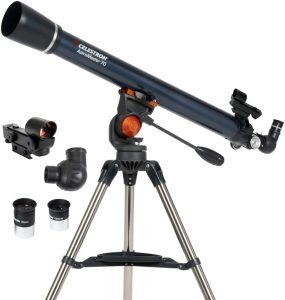
The Celestron Astromaster 70AZ is a refractor telescope that serves as an excellent entry point into the world of astronomy. Known for its ease of setup and robust design, this model is particularly appealing to beginners. The telescope features a 70mm aperture that captures plenty of light for clear, crisp images of the moon and planets.
One of the greatest advantages of the Astromaster 70AZ is its versatility. It works well for both celestial and terrestrial viewing, making it not only great for stargazing but also for wildlife and scenic observations during daylight hours.
Key Benefits
- Easy to assemble and use, ideal for beginners.
- Includes two eyepieces and a permanently mounted StarPointer finder scope.
- Lightweight and portable, perfect for impromptu stargazing trips.
- Strong and stable tripod included.
2. Orion StarBlast 4.5 Astro Reflector Telescope
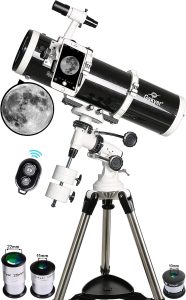
This compact reflector telescope offers wide views of the night sky and is perfect for beginners and families. The Orion StarBlast 4.5 is a tabletop telescope that is easy to handle and store, making it ideal for those with limited space who want to enjoy fast views of the cosmos.
Its 4.5-inch aperture provides superior light-gathering capabilities compared to many beginner scopes, and it comes with everything needed to get started in astronomy. This telescope is often praised for its sturdy build and the quality of its optical components.
Key Benefits
- Excellent light-gathering ability for clearer views.
- Very portable and easy to set up.
- Comes with two eyepieces and an EZ Finder II reflex sight.
Expert Tips
Here are some expert tips that can enhance your stargazing experience as a beginner:
- Start with the Moon: It’s a captivating first target with its detailed craters and seas.
- Attend Star Parties: These gatherings of amateur astronomers are a great way to learn and use different types of telescopes before purchasing.
- Keep a Journal: Log your observations to track progress and make discoveries more memorable.
- Be Patient: Mastering telescope use takes time. Experiment with different settings and learn at your own pace.
Common Mistakes to Avoid
Beginners often fall into a few common traps when starting out with their first telescope. Here are a few to avoid:
- Ignoring the Setup: Take the time to assemble your telescope correctly and familiarize yourself with its operation to get the best experience.
- Impatience: Don’t expect Hubble-quality images from your backyard; telescopes vary greatly in capabilities, especially at beginner levels.
- Overlooking Maintenance: Regular maintenance, like cleaning the lens and mirrors, is essential to keep your telescope in top condition.
Frequently Asked Questions
What is the best type of telescope for beginners?
Refractor and reflector telescopes are generally recommended for beginners due to their ease of use and maintenance.
How much should I spend on my first telescope?
It’s possible to find a decent starter telescope for around $100-$400. Investing more generally provides better optics and more features.
Can I use a telescope during the day?
Yes, many telescopes can also be used for daytime terrestrial viewing, though some are better suited for this dual-purpose than others.
Is a bigger telescope always better?
Not necessarily. Larger telescopes can collect more light, but they can be cumbersome and complicated for beginners.
Do I need additional accessories?
While not always necessary, accessories like a good set of eyepieces, a sturdy tripod, and a finder scope can enhance your viewing experience.
How can I improve my stargazing experience?
Start with a simple, easy-to-use telescope, attend local astronomy clubs or groups, and gradually enhance your setup with better accessories as you gain more experience.
Final Thoughts
Embarking on your astronomical journey with the right telescope can transform your stargazing into an enriching experience. Remember to start simple, learn the basics, and gradually expand your knowledge and equipment. With patience and practice, you’ll unlock the wonders of the universe, one starry night at a time.
Choose wisely, keep learning, and most importantly, enjoy every moment of your new adventure among the stars.