

Have you ever found yourself stuck at choosing between two top-notch telescopes for your stargazing adventures? Today, we’re diving deep into the Celestron Omni XLT 102 vs Sky-Watcher Evostar 102: A Detailed Telescope Comparison.
Picking the right telescope can fundamentally transform your celestial viewing experience. Both the Celestron Omni XLT 102 and the Sky-Watcher Evostar 102 are reputable models in the amateur astronomy community. This detailed comparison aims to help you determine which telescope best fits your astronomical ambitions whether you are just starting out or looking to upgrade.
Quick Overview of Both Products
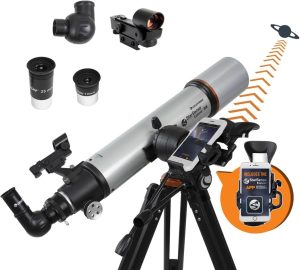
Celestron Omni XLT 102: Known for its clarity and durability, the Celestron Omni XLT 102 is a refractor telescope that promises high quality for amateur astronomers. It features an optical system coated with Celestron’s StarBright XLT coatings, enhancing light transmission for clearer, brighter images.
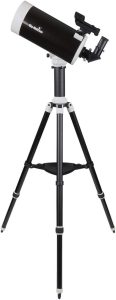
Sky-Watcher Evostar 102: The Sky-Watcher Evostar 102 is another refractor model lauded for its exceptional contrast and sharp definition. It includes an achromatic doublet objective lens that minimizes spherical and chromatic aberrations, offering crisp views of celestial bodies.
Who Each Product Is Designed For
The Celestron Omni XLT 102 is excellent for beginners and intermediate users who value quality and ease of use. Its setup is straightforward, making it welcoming for those new to the hobby.
Conversely, the Sky-Watcher Evostar 102, while also beginner-friendly, caters slightly more to users who have a keen interest in detailed lunar and planetary observation, thanks to its enhanced contrast capabilities.
Side-by-Side Comparison Table
| Feature | Celestron Omni XLT 102 | Sky-Watcher Evostar 102 |
|---|---|---|
| Optical Design | Refractor | Refractor |
| Aperture | 102mm | 102mm |
| Focal Length | 1000mm | 1000mm |
| Focal Ratio | f/9.8 | f/9.8 |
| Eyepiece | 25mm | 20mm & 10mm |
| Mount Type | CG-4 Equatorial | EQ-2 Equatorial |
| Weight | Heavier set-up | Lighter set-up |
Design and Build Quality
Both telescopes boast a solid build, but the Celestron Omni XLT 102 comes with a sturdier CG-4 equatorial mount which is better suited for tracking celestial objects smoothly. The Sky-Watcher, in contrast, has a simpler EQ-2 mount that is easier to handle and set up, making it more portable yet slightly less stable compared to the Celestron.
Features Comparison
The Celestron Omni XLT 102’s StarBright XLT optical coatings are a standout feature, enhancing the overall viewing experience by augmenting light transmission. On the other hand, the Sky-Watcher Evostar 102 offers dual-speed focus controls and comes with two eyepieces, providing versatility and finer control over image clarity.
Performance Comparison
For viewing distant galaxies and nebulae, the Celestron with its superior coatings and stable mount provides a slight edge in performance, delivering brighter and more detailed images. However, for planetary and lunar watching, the Sky-Watcher’s achromatic optics and additional eyepieces offer greater detail and contrast.
Comfort and Ease of Use
While both models require a learning curve, the Celestron Omni XLT 102’s more complex mount system might initially challenge beginners. The Sky-Watcher Evostar’s simpler setup and lighter build contribute to better comfort, especially during long observation sessions or when traveling.
Durability and Reliability
Durability is high with both models, but the robust construction of the Celestron’s mount makes it more resistant to wear and tear, offering more long-term reliability for frequent users.
Maintenance and Warranty
Both telescopes come with limited warranties that cover defects in materials and workmanship. Maintenance-wise, refractor telescopes like these are generally low in upkeep. However, it is crucial to occasionally clean the optics and check the alignment.
Price and Value for Money
Generally, the Celestron Omni XLT 102 is priced slightly higher due to its advanced features and robust mount. The Sky-Watcher, while also providing great value, is more affordable and might appeal more to budget-conscious or less frequent users.
Pros and Cons of Each Product
Celestron Omni XLT 102:
- Pros: Enhanced light transmission, robust construction, precise tracking.
- Cons: Higher price point, heavier, steeper learning curve.
Sky-Watcher Evostar 102:
- Pros: Great value for money, dual eyepieces, easier setup.
- Cons: Less stable mount, lower performance in deep-sky viewing.
Which Product is Best for Beginners
The Sky-Watcher Evostar 102 wins for beginners due to its simplicity, ease of use, and included accessories that offer a direct path to learning various aspects of astronomy.
Which Product is Best for Advanced Users
Advanced users will appreciate the Celestron Omni XLT 102’s enhanced capabilities and sturdy build, making it suitable for detailed astrophotography and deep-sky exploration.
Which Product Offers the Best Value
The best value depends on usage; the Sky-Watcher offers great features at a lower price, but for those who need high performance and durability, the Celestron proves to be worth the extra investment.
Common Mistakes Buyers Make When Choosing Between These Products
One common mistake is underestimating the value of a stable mount. New users might lean toward lighter, less expensive models without considering how a shakier mount can affect the viewing experience, especially at high magnifications.
Frequently Asked Questions (FAQ)
Q1: Can these telescopes be used for terrestrial viewing?
Yes, both can be used for both celestial and terrestrial viewing, though an additional correct-image diagonal may be needed for daytime use.
Q2: Are these telescopes suitable for astrophotography?
Both can be used for basic astrophotography, but the Celestron, with its stable mount and light-enhancing coatings, might yield better results.
Q3: Can additional accessories be added to these telescopes?
Yes, both models are compatible with various accessories like camera adapters, filters, and additional eyepieces to enhance your viewing experience.
Final Verdict: Which Should You Buy?
For Beginners: The Sky-Watcher Evostar 102 is more accessible and provides great learning opportunities without overwhelming newcomers.
For Advanced Users: The Celestron Omni XLT 102, with its robust features and build quality, caters well to the seasoned astronomer’s needs.
For Budget-Conscious Buyers: Sky-Watcher provides an excellent balance of features and affordability.
For Home Users with Limited Space: The Sky-Watcher’s lighter and more compact design is preferable.
Choosing the right telescope depends on personal needs, experience level, and what celestial wonders you aim to explore. Both the Celestron Omni XLT 102 and Sky-Watcher Evostar 102 offer gateways to the stars, each with its strengths. Consider what you value most in your astronomical journey and select the telescope that aligns with your sky-watching dreams!